
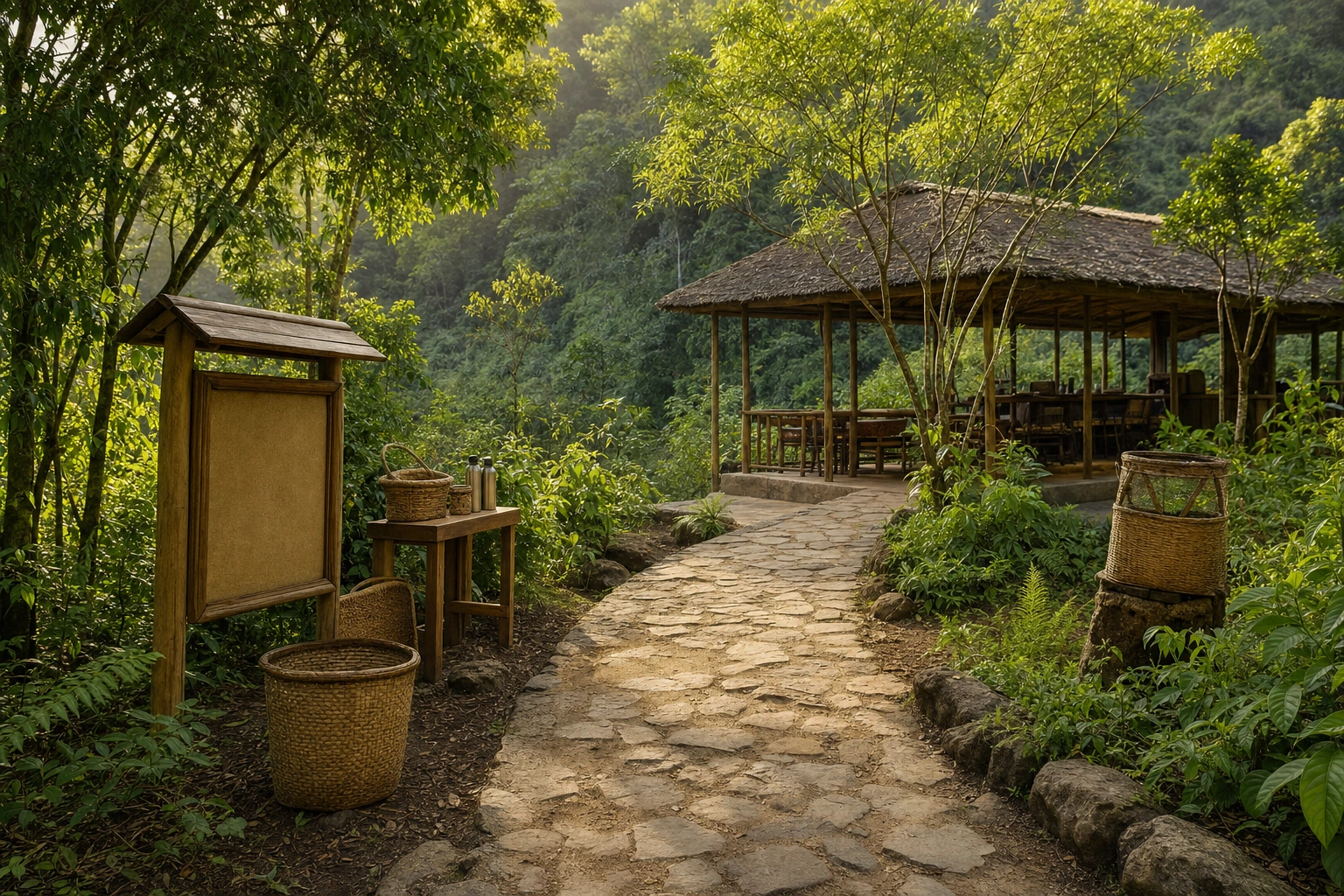
Community-based tourism is an approach to tourism in which local residents play a meaningful role in planning, managing, hosting and benefiting from tourism activities. Instead of treating a destination simply as a product for visitors, it recognises the community as a partner, rights-holder and source of knowledge.
When designed well, community-based tourism can support local livelihoods while encouraging the protection of culture, landscapes and biodiversity. However, it is not automatically sustainable because an activity is small, rural or community-branded. Genuine local participation, fair benefit-sharing, responsible visitor management and transparent decision-making are all necessary.
What Community-Based Tourism Means
Community-based tourism is tourism that is substantially owned, governed or influenced by people living in the destination. Local residents may provide accommodation, guiding, cultural experiences, food, transport, crafts, conservation activities or other services. They may also participate through a community trust, cooperative, association, conservancy or other locally accountable structure.
The central question is not simply, “How many local people work in tourism?” It is also, “Who decides what tourism looks like, who controls the resources, and who receives the benefits?” A community that supplies labour while outside organisations control land, branding, prices and profits has limited influence, even if the project uses the word community.
Community-based tourism can form part of a wider sustainable tourism strategy. Sustainable tourism considers the environmental, social, cultural and economic effects of tourism over the long term. Community-based tourism gives particular attention to local agency, dignity, ownership and the distribution of benefits.
How It Supports Local Development
Creating and diversifying livelihoods
Tourism can provide income through guiding, catering, accommodation, cultural performances, transport, farming supplies, laundry, maintenance, interpretation and craft production. These opportunities may be especially useful where households have seasonal or irregular income from agriculture, fishing or informal trade.
A household guesthouse, for example, may earn directly from visitors while purchasing vegetables from nearby farmers and using local builders for improvements. This creates a wider local economic effect than an operation that imports most of its supplies and sends profits elsewhere. Tourism should not replace all existing livelihoods, but it can diversify them and reduce dependence on a single source of income.
Strengthening local enterprises
Visitors create demand for products and services, but local businesses need the capacity to meet that demand consistently. Community-based tourism can encourage entrepreneurship in food processing, transport, photography, guiding, cultural education, outdoor activities and environmentally responsible accommodation.
Businesses may also learn useful skills such as bookkeeping, customer care, digital marketing, food safety, stock management and pricing. These capabilities can serve customers beyond tourism. A small catering enterprise, for instance, may begin by serving visitors and later supply schools, offices or local events.
Supporting public and shared priorities
Some community tourism models allocate part of their income to shared priorities such as water access, education support, health initiatives, waste management or conservation. This can be valuable when the system is voluntary, transparent and agreed by the community.
Such contributions should not be presented as a substitute for public services or used to hide unfair commercial arrangements. Residents need to know how much money is collected, what costs are deducted and how decisions about community funds are made.
Protecting culture and natural resources
Tourism can create an economic reason to protect forests, wetlands, wildlife habitats, historic sites, traditional foodways and forms of knowledge. Local guides and elders may help visitors understand the meaning of a landscape or cultural practice in ways that a generic tour cannot provide.
Protection is strongest when residents have real authority and benefit from conservation. If a community is restricted from using land or resources without receiving a fair alternative livelihood or a voice in management, conflict can increase. Conservation and tourism plans therefore need to recognise local rights, customary knowledge and practical household needs.
Community-Based Tourism and Mass Tourism
Community-based tourism is not defined only by group size. A small tour can still be controlled by an outside operator, while a larger destination can include meaningful community ownership. The difference lies in governance, accountability and benefit distribution.
Mass tourism commonly involves high visitor volumes, standardised products and significant infrastructure. It can create employment and investment, but it may also place pressure on water, energy, waste systems, housing, cultural spaces and ecosystems. Community-based tourism usually seeks a closer relationship between visitor numbers, local capacity and the character of the destination.
It is also different from cultural tourism in emphasis. Cultural tourism focuses on experiences involving heritage, beliefs, food, arts or everyday life. Community-based tourism may include cultural tourism, but its defining feature is local participation and benefit, not the subject matter of the experience alone.
Principles of Responsible Community-Based Tourism
Meaningful participation
Participation should begin before a tourism product is designed. Residents need opportunities to discuss whether tourism is wanted, what forms are acceptable, which places or practices should remain private, and what benefits are required. Meetings should be accessible to women, young people, people with disabilities, minority groups and households that may not hold formal leadership positions.
Consultation is not the same as consent. A meeting held after major decisions have already been made does not give the community genuine control. Good participation allows concerns to change the plan.
Fair and transparent benefit-sharing
Benefits may include wages, contracts, business income, training, shared funds, improved facilities or access to markets. The arrangement should be clear before operations begin. A written agreement can state who owns the product, how revenue is divided, which costs are legitimate, how disputes are handled and how the arrangement can be reviewed.
Fairness does not always mean that every person receives the same amount. It may mean that benefits reflect work performed, investment, responsibility or an agreed community contribution. What matters is that the rules are understood, accountable and not controlled by a small group without oversight.
Respect for culture and consent
Communities should decide which ceremonies, stories, sacred places, images and knowledge may be shared. Visitors should not be encouraged to treat residents as spectacles or to photograph people, homes or rituals without permission.
Cultural experiences should be explained accurately and presented with dignity. A community may choose to adapt an activity for visitors, but it should not be pressured to perform a sacred practice or disclose knowledge that it considers private.
Environmental responsibility
Tourism operations should consider water use, energy, sewage, solid waste, transport, construction, wildlife disturbance and pressure on local resources. Practical measures might include refill stations, water-efficient facilities, locally appropriate building materials, careful waste separation, limits on group size and designated paths.
Environmental claims should be specific. Saying that a lodge is “eco-friendly” is less useful than explaining how it manages wastewater, reduces disposable packaging or protects a nearby habitat. Monitoring helps determine whether these measures are working.
Local control and accountability
Leadership structures need clear roles, financial records and ways for residents to raise concerns. A community committee should not become an unaccountable gatekeeper. Regular reporting, independent review where appropriate and rotation of responsibilities can reduce mistrust and concentration of power.
Common Challenges and How to Manage Them
Unequal participation
Tourism benefits may go mainly to households near an attraction, people with capital, fluent speakers of foreign languages or those connected to local leaders. Others may carry the costs without receiving income.
Planning should identify who gains, who may lose access to resources and who is likely to be excluded. Training, transparent recruitment, supplier opportunities and targeted support can widen participation. Benefit-sharing should also recognise unpaid community work and the needs of households affected by visitor activity.
Leakage of tourism income
Leakage occurs when tourism revenue leaves the destination through external ownership, imported supplies, outside management or payments to distant intermediaries. Local procurement can reduce leakage, but it must be balanced with quality, reliability and safety requirements.
For example, a tourism enterprise could map its regular purchases and ask which items can be sourced locally without compromising food safety or service standards. It might then work with suppliers to improve packaging, delivery schedules and consistency.
Dependence on visitors
Tourism demand can change because of economic conditions, transport disruption, health emergencies, environmental events or shifting travel preferences. A community that relies on tourism for every household need is vulnerable.
Resilience may involve maintaining agriculture, fishing, crafts, education, professional skills and other income sources alongside tourism. Enterprises can also serve domestic visitors and local organisations rather than depending on one international market.
Commercial pressure and loss of authenticity
As a destination becomes popular, investors may seek control of land, accommodation or attractions. Local culture may also be simplified to fit visitor expectations. Community leaders should set boundaries on development, visitor behaviour, photography, construction and the use of cultural material.
Authenticity does not require communities to remain unchanged. It means that local people retain the right to decide how their culture is represented and how it evolves.
Weak business systems
Good intentions cannot compensate for poor financial management, unreliable service or unclear responsibilities. Community enterprises benefit from realistic budgets, cash-flow planning, pricing based on full costs, maintenance schedules and customer feedback.
Training should be practical and ongoing. A one-off workshop may not be enough to build confidence in accounting, digital reservations, hygiene or guiding. Partnerships with tourism professionals can help, provided they strengthen local capacity rather than replace local decision-making.
Planning a Community-Based Tourism Product
- Assess local assets and limits. Identify natural features, cultural knowledge, skills, facilities, transport access and existing businesses. Also record water constraints, sensitive habitats, seasonal conditions and places that should not be visited.
- Establish community priorities. Discuss the type and scale of tourism residents support. Agree on desired benefits, unacceptable impacts and the responsibilities of different groups.
- Define the customer and experience. A product should meet a real visitor need while remaining true to local capacity. It might be a guided wetland walk, a farm-to-table meal, a craft workshop, a heritage trail or a family-run homestay.
- Build the operating model. Decide who handles reservations, guiding, transport, safety, cleaning, payments, complaints and marketing. Record responsibilities rather than assuming that everyone understands them.
- Set prices and benefits fairly. Calculate labour, food, transport, maintenance, taxes or fees where applicable and a contribution to shared priorities. Then explain the revenue-sharing system to participating households and the wider community.
- Manage risk. Consider accidents, weather, illness, safeguarding, theft, visitor misconduct, environmental damage and emergency communication. Appropriate insurance, first-aid preparation, visitor briefings and referral procedures may be necessary.
- Test before expanding. Begin with a manageable number of visitors, gather feedback from residents and guests, and adjust the experience. Growth should follow evidence that the community can maintain quality and control impacts.
- Monitor results. Track more than visitor numbers. Useful indicators include local income, local procurement, participation by different groups, resident satisfaction, complaints, waste, water use and the condition of natural or cultural assets.
Applying This in Practice
Imagine a rural community near a forest wants to develop guided nature walks. The first step is not to print brochures; it is to decide whether residents support the idea and what parts of the forest can safely and respectfully be visited. The community can then identify trained guides, agree on group sizes, establish a booking process and set rules for waste, noise and wildlife disturbance.
The financial model should distinguish guide payments from any shared conservation or community fund. Receipts and records should be available for review. Local food suppliers might provide packed meals, while a trained local mechanic supports transport. If visitors repeatedly request activities that residents do not wish to provide, the community can decline them or offer an alternative.
After a trial period, residents and visitors can review the experience. Perhaps the route causes erosion during heavy rain, the price does not cover preparation time, or women involved in catering are excluded from key decisions. These findings should lead to changes. Adaptive management is more responsible than treating the original plan as permanent.
Questions to Consider
- Do local residents have the power to approve, change or stop the tourism activity?
- Which households and groups will benefit, and who might be excluded?
- What costs will the community carry, including cultural, environmental and time costs?
- Are revenue-sharing rules written in clear language and publicly understood?
- How will the project protect privacy, cultural knowledge, land, water and biodiversity?
- What skills, infrastructure and partnerships are needed, and who will control those partnerships?
- What evidence will show whether the project is improving local wellbeing rather than merely increasing visitor numbers?
Key Takeaways
- Community-based tourism is defined by local influence, ownership or governance, not simply by having local workers.
- Fair benefit-sharing requires clear rules about income, costs, responsibilities and community funds.
- Residents should help decide what tourism is acceptable before products and investments are developed.
- Cultural respect includes consent, privacy and the right to keep certain practices or places outside tourism.
- Environmental responsibility should be demonstrated through practical management of water, waste, energy, land and visitor numbers.
- Strong bookkeeping, risk management, monitoring and regular community review help tourism remain locally useful and resilient.
No comments yet.