
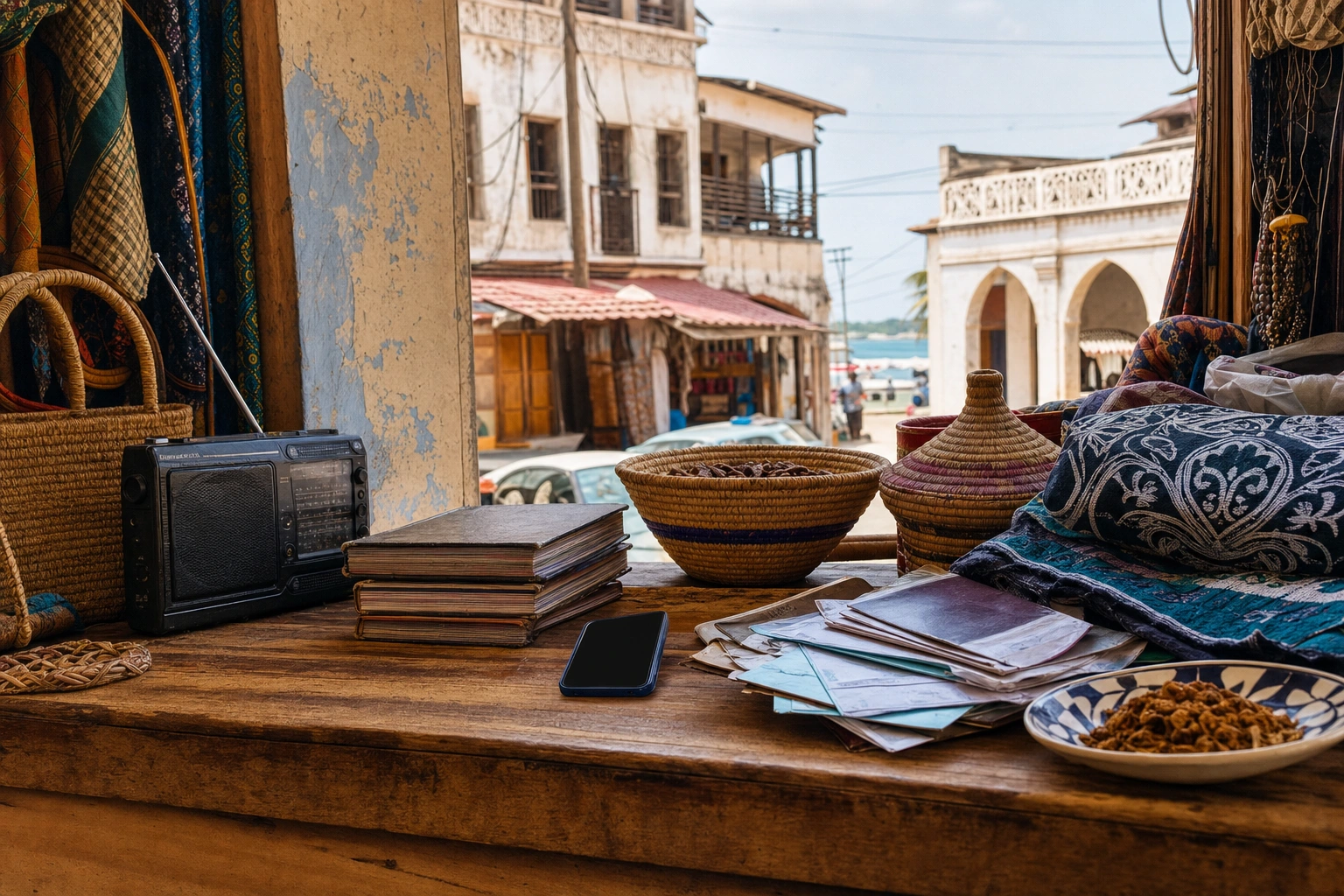
Kiswahili plays a central role in the social, economic and cultural life of East Africa. It is used by people from different ethnic and linguistic backgrounds to communicate in homes, markets, schools, workplaces, media platforms and public institutions. For many speakers, it is a first language; for many more, it is an additional language learned for everyday communication.
The language is also commonly called Swahili. The word Kiswahili refers to the language, while Waswahili refers to Swahili-speaking people. Although Kiswahili developed along the East African coast, its influence now extends far beyond coastal communities. Understanding its role helps explain how language can support regional integration while preserving cultural identity.
What Is Kiswahili?
Kiswahili is a Bantu language of the Niger-Congo language family. Its grammatical structure, including noun classes and verb formation, is fundamentally Bantu. Over centuries, however, contact with traders, religious teachers and communities from across the Indian Ocean introduced vocabulary from languages such as Arabic, Persian, Portuguese, English and Hindi.
This history explains why Kiswahili contains words with different origins. For example, kitabu means book, habari means news or information, and safari means journey. These words have entered Kiswahili through historical contact, but they are used within a Bantu grammatical system. It would therefore be inaccurate to describe Kiswahili simply as an Arabic language or a mixture without its own structure. It is a distinct African language with a long history of adaptation.
Kiswahili includes several regional varieties, often called dialects. Kiunguja, associated particularly with Zanzibar, has had a major influence on the standard form used in education and public communication. Other varieties include Kimvita, associated with Mombasa, and forms spoken along the Tanzanian and Kenyan coast. Inland speakers may use regional accents, vocabulary and expressions that differ from coastal speech while still sharing a common language.
Historical Development Along the East African Coast
Kiswahili grew in coastal settlements connected to trade across the Indian Ocean. Ports and towns along the coasts of present-day Kenya, Tanzania and northern Mozambique brought together African communities and visitors from Arabia, Persia, India and other regions. Trade created a practical need for communication across languages.
Coastal communities used Kiswahili in commerce, fishing, farming, religious life and local administration. Islam also contributed to the development of written Kiswahili, particularly through the use of Arabic script in earlier periods. Later, Christian missionaries, colonial administrations and educators promoted writing Kiswahili in the Roman alphabet. Today, Roman script is the standard form used in schools, publishing, government communication and digital media.
The language gradually moved inland through trade routes, religious networks, military activities, labour migration, formal education and colonial administration. It became useful not only in coastal towns but also in areas where people needed to communicate across ethnic or regional boundaries. This movement helped establish Kiswahili as a regional lingua franca: a shared language used by people whose first languages are different.
Kiswahili as a Regional Lingua Franca
East Africa is linguistically diverse. Kenya, Tanzania, Uganda, Rwanda, Burundi, South Sudan and the eastern Democratic Republic of the Congo contain many indigenous languages, alongside English, French and other international languages. In this setting, Kiswahili provides a familiar means of communication for millions of people.
Its usefulness is especially clear in cross-border activity. A trader travelling from Tanzania to Kenya may use Kiswahili when negotiating prices, arranging transport or speaking with customers. A health worker working in a multilingual county may use it to explain basic instructions. A driver, construction worker, student or entrepreneur moving between towns can rely on Kiswahili even when the local language changes.
Being a lingua franca does not mean that Kiswahili replaces every other language. People often move between Kiswahili, English, French and local languages depending on the situation. A professional may write a formal report in English, discuss a work issue in Kiswahili and speak a home language with relatives. This ability to shift between languages is common in East African communication.
National and Public Roles
Kiswahili has a particularly strong public role in Tanzania, where it is used extensively in government, education, media and national life. It has also been important in building communication across communities with different ethnic backgrounds. Tanzania’s experience demonstrates how a widely shared African language can support national communication without requiring every citizen to share the same ethnic identity.
In Kenya, Kiswahili is one of the country’s official languages, alongside English, and it is also recognised as a national language. It is used in public communication, broadcasting, education, politics, business and everyday conversation. Kenyan Kiswahili includes both standard forms and lively urban varieties, such as Sheng, which combines elements of Kiswahili, English and several Kenyan languages.
Uganda has a multilingual society in which English has a major official role and Kiswahili is also recognised in the country’s constitutional language framework. Kiswahili is used in schools, security services, trade, popular culture and regional communication, although levels of use differ between communities and parts of the country.
Across the wider region, Kiswahili is also used in Rwanda, Burundi, eastern parts of the Democratic Republic of the Congo, northern Mozambique and parts of South Sudan. The extent and form of use vary, but its regional value is strengthened by migration, trade, media, education and cooperation among neighbouring countries.
Education and Knowledge
Language choice in education affects who can understand lessons, participate confidently and access knowledge. Kiswahili can make learning more accessible when it is used carefully as a language of instruction or explanation, particularly in the early years of schooling. Learners can often understand new concepts more easily when teachers connect them to a language they already know well.
At the same time, education systems must manage the relationship between Kiswahili, English, French and local languages. English remains important in many East African countries because it is widely used in higher education, international business, science and professional documentation. A strong language policy therefore does not need to present Kiswahili and English as competitors. Learners benefit from developing Kiswahili proficiency while also gaining access to international languages and their home languages.
Kiswahili is increasingly used to discuss subjects beyond everyday conversation. Textbooks, dictionaries, journalism, literature, public health materials, legal explanations and digital courses have expanded the language’s vocabulary. This process requires careful terminology development. When a new scientific or technological concept appears, teachers, writers and institutions must decide whether to adopt a loanword, adapt an existing word or create a new term that speakers can understand.
For adult learners and professionals, learning Kiswahili can improve workplace communication even when it is not the language of formal records. A project manager who can explain a task in clear Kiswahili may build better understanding among staff and community members. A business owner who knows how customers describe their needs in Kiswahili can serve them more effectively than one who relies only on formal English.
Trade, Employment and Regional Integration
East African commerce depends on communication across borders. Markets, transport corridors, tourism, agriculture, construction and informal trade all involve people who may not share a first language. Kiswahili reduces friction in these interactions by providing a commonly understood channel.
Consider a small business selling packaged food in Arusha, Nairobi or Kampala. The owner may need to speak with suppliers, transporters, retailers and customers from different language communities. Clear Kiswahili can help with product explanations, delivery arrangements, payment discussions and customer service. In tourism, guides and hospitality workers use Kiswahili to communicate with local visitors, while also using other languages for international guests.
Kiswahili also supports regional identity. East African cooperation is not only a matter of treaties, infrastructure and trade rules; it also depends on ordinary people being able to interact. A shared language can make regional meetings, cultural exchanges and public information more accessible. Regional institutions have increasingly recognised the value of Kiswahili alongside other working languages used in East African cooperation.
However, language alone cannot remove every barrier to trade. Businesses still need reliable transport, transparent regulations, suitable payment systems and accurate information. Kiswahili is an enabling tool, not a substitute for sound institutions or professional standards.
Media, Music and Popular Culture
Radio, television, newspapers, film, music and social media have helped Kiswahili reach audiences across national borders. A programme produced in one country can attract listeners and viewers elsewhere because the language is widely understood. Media also introduces new expressions, humour and ways of discussing politics, relationships, technology and work.
Music has been especially influential in making Kiswahili familiar to younger generations. Artists use standard Kiswahili, local varieties, English and other languages to create distinctive styles. This mixing is not necessarily evidence that Kiswahili is weakening. It shows that speakers are using language creatively to reflect changing urban life and identity.
Digital communication has created both opportunities and challenges. Kiswahili content can reach learners who have limited access to printed resources, while online dictionaries and language-learning tools support vocabulary development. At the same time, informal spelling, rapid slang formation and direct translation from English can produce confusion. Writers and educators need to distinguish between creative everyday usage and language required for formal, technical or academic purposes.
Identity, Inclusion and Cultural Memory
Language carries more than information. It conveys humour, politeness, social relationships, history and values. Kiswahili proverbs, poetry, songs and stories preserve ways of interpreting human behaviour and community life. Expressions such as haraka haraka haina baraka—roughly, haste does not bring blessing—illustrate how language can communicate practical wisdom in a memorable form.
For many people, Kiswahili provides a shared identity that is broader than ethnicity or nationality. Someone may identify strongly with a local language and culture while also seeing Kiswahili as part of their East African identity. This layered identity is particularly visible in cities, schools, workplaces and border communities.
Using Kiswahili can also support inclusion. Public information delivered in a language understood by a broad population may reach people who would struggle with formal English or French. Yet inclusion requires attention to variation. A message that is clear in one country or age group may sound unfamiliar elsewhere. Effective communicators should avoid unnecessarily complicated vocabulary, explain specialised terms and test important messages with intended audiences.
Challenges Facing Kiswahili
Kiswahili has expanded significantly, but it faces several practical challenges. One is unequal access to high-quality learning materials. Some subjects, especially advanced science, technology and professional training, have more established resources in English or French than in Kiswahili. Translators and educators must develop accurate terminology without making texts difficult to read.
Another challenge is the difference between standard Kiswahili and local usage. Standard forms are valuable for formal communication across borders, but regional varieties carry cultural meaning and should not be treated as inferior. Learners can be taught when to use a formal standard and when informal or local language is appropriate.
There is also a need for consistent language teaching. Memorising isolated vocabulary is not enough. Learners need practice with pronunciation, noun classes, verb patterns, listening, reading and real conversations. Employers and institutions should recognise that functional language ability develops through regular use, not through a certificate alone.
Finally, digital platforms need more quality Kiswahili content. Search tools, educational resources, accessibility features and professional software work best when they reflect the language people actually use. Creating reliable content in Kiswahili is therefore part of expanding participation in the digital economy.
Applying This in Practice
Adults who want to use Kiswahili more effectively can begin with a practical communication goal rather than trying to master everything at once.
- Identify your setting. Decide whether you need Kiswahili for customer service, travel, community work, study, family communication or regional business.
- Learn useful sentence patterns. Practise complete expressions for greeting, asking questions, clarifying information, giving directions and confirming arrangements.
- Build grammar gradually. Pay attention to noun classes and verb forms because they help you create accurate sentences rather than relying only on memorised phrases.
- Listen to different speakers. Use broadcasts, conversations and educational materials from more than one region so that you become comfortable with accents and vocabulary differences.
- Check meaning respectfully. If a word or expression is unfamiliar, ask for clarification instead of assuming that a local usage has the same meaning everywhere.
- Use Kiswahili where it improves understanding. In a workplace or community project, explain key points in Kiswahili and retain English or another language where formal documentation requires it.
For organisations, a useful approach is to create bilingual materials, train staff in customer-facing Kiswahili and review important translations with fluent speakers. The aim should be accuracy, respect and accessibility rather than replacing every language with one standard.
Key Takeaways
- Kiswahili is a distinct Bantu language shaped by centuries of contact along the East African coast.
- It functions as a regional lingua franca, helping people from different language communities communicate.
- Kiswahili supports education, public communication, trade, employment, media and cultural expression.
- Its national and public roles differ across East African countries, so language use must be understood in context.
- Standard Kiswahili is useful for broad communication, while regional varieties preserve local identity and meaning.
- Effective learners practise complete communication patterns, listening and grammar in situations relevant to their goals.
No comments yet.