
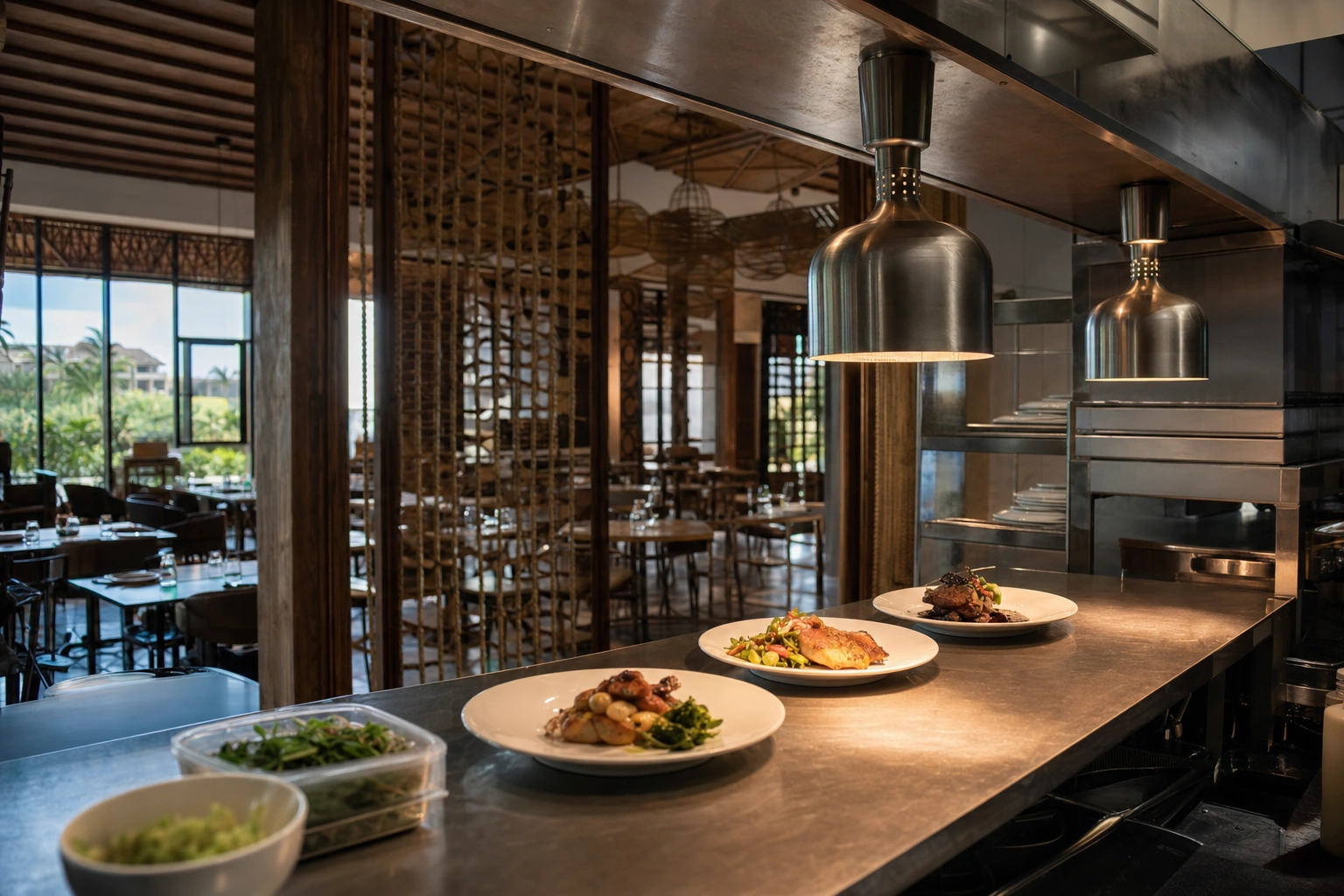
Food and beverage operations are one of the most visible and demanding parts of hotel management. They include every activity involved in providing food and drinks to guests, from menu planning and purchasing to preparation, service, payment and waste control. In a hotel, these operations may cover restaurants, bars, cafés, room service, banqueting, conferences, staff meals and minibar services.
The role of food and beverage operations extends beyond serving meals. A well-managed operation influences how guests judge the entire property, whether they return, how much they spend and what they say about their experience. It also affects staff coordination, cash flow, food safety, resource use and the hotel’s reputation. For this reason, food and beverage should be managed as both a service function and a commercial operation.
What Food and Beverage Operations Involve
Food and beverage operations bring together several departments and processes. Although the guest may see only the dining room or delivery tray, the complete service depends on coordinated work behind the scenes.
- Food production: Chefs and kitchen teams receive ingredients, store them, prepare dishes and maintain consistent quality.
- Food and beverage service: Front-of-house staff welcome guests, explain menus, take orders, serve items and respond to requests.
- Purchasing and receiving: The hotel selects suppliers, orders stock and checks deliveries for quality, quantity and condition.
- Storage and inventory: Perishable and non-perishable items are stored safely and monitored to reduce spoilage and shortages.
- Revenue and cost control: Managers monitor sales, portion sizes, pricing, labour costs, waste and stock usage.
- Events and banqueting: Teams plan meals and refreshments for meetings, weddings, conferences and other functions.
- Guest support: Staff handle dietary requests, allergies, complaints, special occasions and service recovery.
These activities are interdependent. If purchasing orders poor-quality produce, the kitchen may struggle to deliver a good meal. If the kitchen changes a recipe without informing service staff, guests may receive inaccurate information. If sales records are incomplete, management may not understand which products are profitable. Effective operations therefore depend on communication as much as technical skill.
Why Food and Beverage Operations Matter in Hotels
They shape the guest experience
Dining is often a major part of a guest’s memory of a hotel. A breakfast that starts the day smoothly, a well-presented dinner or a prompt room-service delivery can strengthen satisfaction. Conversely, slow service, unclear pricing, poor cleanliness or inconsistent food can damage the guest’s view of the entire hotel, even when the bedroom is comfortable.
Food and beverage service also provides opportunities for personalisation. Staff may accommodate cultural preferences, religious requirements, allergies, children’s needs or a guest’s desire for a quick meal before travelling. In a Kenyan hotel, for example, a menu might combine international dishes with familiar regional options such as nyama choma, vegetable stews, chapati or locally sourced fish. The important principle is not simply offering local food, but presenting it safely, accurately and in a way that suits the target market.
They generate revenue
Hotels earn revenue from more than room sales. Restaurants, bars, conferences, weddings, outside catering and room service can all contribute to the property’s income. A guest who books a room may also purchase breakfast, refreshments, dinner, drinks or event services. Food and beverage operations therefore increase the value of each guest relationship.
Revenue, however, is not the same as profit. A busy restaurant may still perform poorly if portions are uncontrolled, ingredients are wasted, labour is inefficient or prices do not cover operating costs. Managers must examine both sales and the resources used to achieve those sales.
They support the hotel’s brand and positioning
A luxury hotel may compete through refined service, distinctive menus and carefully presented dishes. A business hotel may focus on speed, dependable breakfast and efficient conference catering. A lodge may emphasise local produce, regional cooking and a connection with its environment. Food and beverage operations must reflect the hotel’s overall identity rather than operate as an unrelated outlet.
The Main Areas of Food and Beverage Management
Menu planning
Menu planning involves deciding what to offer, to whom, at what price and with what operational resources. A successful menu considers guest preferences, available equipment, staff skills, ingredient availability, preparation time and expected demand.
A menu should be attractive, but it must also be practical. Offering too many dishes can make purchasing, storage and kitchen production more complicated. It may also increase waste if ingredients are used infrequently. Managers often design menus around ingredients that can be used across several dishes without making the menu feel repetitive.
Menus should communicate information clearly. Descriptions need to be accurate, prices must be visible and staff should understand ingredients and preparation methods. Where relevant, the operation should provide clear guidance about allergens and dietary suitability rather than making uncertain promises.
Purchasing and supplier management
Purchasing is the process of obtaining the ingredients, beverages, equipment and supplies required for operations. Good purchasing balances quality, price, reliability and consistency. The cheapest supplier is not always the best choice if deliveries are late, quantities are inaccurate or quality changes from one order to the next.
A purchasing process normally includes forecasting demand, preparing specifications, comparing suppliers, placing orders, checking deliveries and recording stock. Specifications should describe the required quality, size, grade, packaging or condition of an item. For example, simply ordering “tomatoes” may be less useful than specifying the variety, ripeness and intended use.
Receiving staff should check deliveries against purchase orders and delivery documents. They should look for damaged packaging, signs of spoilage, incorrect quantities and products that do not meet the agreed specification. Prompt reporting makes it easier to resolve problems and protect the hotel from avoidable losses.
Storage and inventory control
Food must be stored in a manner that protects quality and reduces contamination. Different products require different conditions, and staff must follow the hotel’s food-safety procedures. Dry stores should be clean and organised, while chilled and frozen products require appropriate temperature control and regular monitoring.
Inventory control means knowing what has been purchased, what is available, what has been used and what has been wasted. Stock should be rotated so that older items are used before newer items where appropriate. Clear labelling, dated containers and regular stock counts make this easier.
Weak inventory control creates several problems: food may expire, popular items may run out, theft may go unnoticed and financial reports may become unreliable. A simple stock card, spreadsheet or approved digital system can help, provided staff use it consistently.
Food production
The kitchen converts raw materials into dishes that meet the menu specification. This requires planning, preparation, cooking, portioning, presentation and cleaning. Standard recipes are especially useful because they describe ingredients, quantities, methods and serving sizes. They help different cooks produce a reasonably consistent result.
Production planning should match expected demand. Preparing every item in large quantities may create waste, while preparing too little can cause delays and disappointed guests. Forecasts can be based on room occupancy, reservations, previous sales patterns, event bookings and current information from the front office.
Kitchen and service teams must communicate throughout a shift. Service staff need to know which dishes are unavailable, how long preparation may take and whether ingredients have changed. Kitchen staff need accurate order information and timely updates about large parties or special requests.
Service delivery
Service includes the complete interaction between the guest and the food and beverage team. It begins with welcoming and seating, continues through menu explanation and order taking, and ends with payment, feedback and table resetting. In room service, the same principles apply, although delivery, tray collection and privacy become more important.
Professional service is not limited to formal table manners. It includes attentiveness, clear communication, product knowledge, accurate order handling and respect for the guest. Staff should avoid making assumptions about preferences and should confirm important details, particularly allergies, room numbers, event requirements and billing instructions.
Service recovery is also part of the operation. When a problem occurs, staff should listen without unnecessary argument, acknowledge the concern, explain the available solution and involve a supervisor when required. The response should be recorded if the issue may recur or affect other guests.
Food Safety, Hygiene and Responsible Practice
Food safety is a basic operational responsibility, not an optional extra. Hotels need clear procedures for personal hygiene, cleaning, safe food handling, storage, preparation and service. Staff should understand their responsibilities and receive appropriate training for their roles.
Important practices include washing hands correctly, keeping work areas clean, preventing cross-contamination, protecting food during storage and service, and following approved temperature-control procedures. Raw and ready-to-eat foods require careful separation, and utensils or equipment should be cleaned according to the operation’s procedures.
Managers should also take guest allergies seriously. Information about ingredients must be accurate, and staff should never guess when they are uncertain. The safest response is to check with the kitchen or supervisor and communicate the answer clearly to the guest.
Responsible practice includes reducing waste, using water and energy carefully, selecting supplies thoughtfully and complying with applicable local requirements. A hotel may reduce waste by forecasting demand more accurately, using ingredients across suitable menu items, monitoring buffet production and separating avoidable waste from unavoidable waste. These measures can support both environmental responsibility and cost control.
Managing Quality and Performance
Quality management means setting standards, observing performance and correcting problems. Standards may cover food appearance, taste, portion size, serving time, cleanliness, staff presentation, billing accuracy and complaint handling.
Useful performance measures depend on the hotel’s objectives, but managers may review:
- Sales by outlet, meal period or product category.
- Ingredient usage and food-cost performance.
- Average transaction value and the proportion of guests using food and beverage services.
- Waste, spoilage and stock variances.
- Guest feedback, complaints and repeat problems.
- Service times and the accuracy of orders.
- Staff attendance, productivity and training needs.
These measures should be interpreted together. For example, faster service is not necessarily better if it reduces food quality or causes errors. Similarly, cutting staff hours may reduce labour costs in the short term but create delays, fatigue and poor guest experiences. Good management looks for a sustainable balance between efficiency, quality and employee wellbeing.
Coordination with Other Hotel Departments
Food and beverage operations cannot succeed in isolation. The front office provides information about occupancy, guest arrivals, special occasions and group bookings. Sales teams communicate event requirements and client expectations. Housekeeping may coordinate minibar services or support cleanliness in public areas. Finance helps monitor revenue, purchasing and payment controls. Human resources supports recruitment, training and workplace procedures.
Communication is particularly important when occupancy changes quickly or when the hotel is hosting a large event. A conference schedule may influence breakfast timing, coffee breaks, lunch service and evening functions. If departments share information early, the operation can plan staffing, supplies and production more accurately.
Technology can assist with reservations, point-of-sale records, stock management and communication. However, technology does not replace sound procedures. Incorrect data, poorly trained users or weak controls can still produce errors. Systems should be chosen and used to support clear operational decisions.
Applying This in Practice
Consider a mid-sized hotel preparing for a weekend wedding and a high number of leisure guests. A practical management process might follow these steps:
- Confirm demand: Review room occupancy, restaurant reservations, event numbers, meal times and special dietary requests.
- Plan the menu: Select dishes that suit the event, the guests, the budget and the kitchen’s capacity. Identify ingredients that can be used efficiently across services.
- Prepare purchasing specifications: State the required quantities and quality standards, then order from reliable suppliers.
- Check and store deliveries: Inspect items when they arrive, record discrepancies and store products safely using appropriate rotation procedures.
- Organise staff: Assign responsibilities for preparation, service, clearing, payment, guest enquiries and event coordination. Brief the team before service.
- Control production: Use standard recipes, monitor portions and adjust production when demand changes, while maintaining safety and quality.
- Monitor service: Observe waiting times, order accuracy, cleanliness and guest reactions throughout the event.
- Review performance: Compare sales, usage, waste, guest feedback and operational problems. Record improvements for the next event.
This approach shows that food and beverage management is a continuous cycle: forecast, prepare, deliver, monitor and improve. The same logic applies to a small café in a town hotel, a safari lodge, a conference centre or a large international property.
Key Takeaways
- Food and beverage operations include purchasing, storage, production, service, revenue control, events and guest support.
- Dining quality influences guest satisfaction, hotel reputation and the likelihood of repeat business.
- Revenue must be assessed alongside food cost, labour, waste, stock accuracy and service quality.
- Standard recipes, accurate menus and clear communication help create consistent service.
- Food safety, hygiene and reliable allergy information are essential operational responsibilities.
- Effective performance depends on coordination between food and beverage, front office, sales, finance and other departments.
- Managers improve results by forecasting demand, controlling resources, monitoring service and reviewing performance.
No comments yet.