
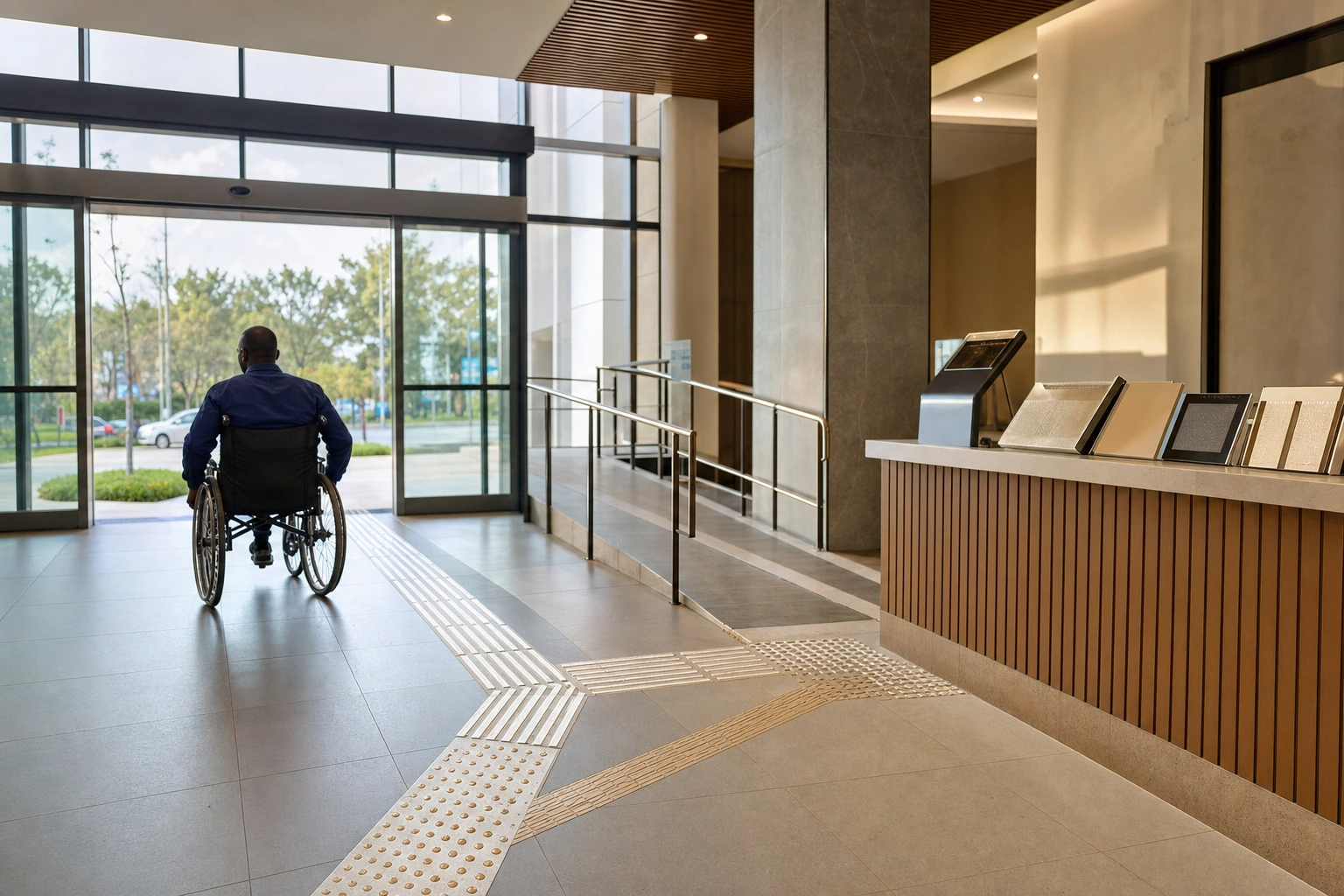
The rights of persons with disabilities are human rights, not special favours or acts of charity. Constitutional protection exists because people with disabilities have the same inherent dignity, freedoms and entitlement to participate in society as everyone else. Disability should never be used as a reason to exclude a person from education, employment, public services, transport, political participation or community life.
In Kenya, the Constitution provides a useful framework for understanding these rights. It protects equality and freedom from discrimination, recognises the need for affirmative measures, and sets out specific rights for persons with disabilities. These protections should be read together with other relevant laws, policies and international human-rights standards. This article explains the main principles in practical language and shows how they apply to everyday situations.
What Is Meant by Disability?
Disability can involve a physical, sensory, intellectual, developmental, mental or psychological impairment. It may be visible or non-visible, permanent or temporary, and present from birth or acquired later in life. Examples include mobility limitations, visual or hearing impairments, epilepsy, autism, psychosocial disabilities and conditions that affect communication or learning.
A rights-based approach does not look only at a person’s medical condition. It also examines the barriers created by the environment. For example, a person who uses a wheelchair may be prevented from entering a building because there is no ramp. A deaf learner may be excluded from a lesson because interpretation is unavailable. A person with a psychosocial disability may be denied employment because of assumptions rather than an assessment of their ability to perform the work.
This distinction is important. The difficulty may not arise solely from the impairment; it may arise from inaccessible buildings, inflexible rules, negative attitudes, poor communication or a failure to provide appropriate support.
Equality and Freedom from Discrimination
Equality means that persons with disabilities are entitled to the same legal protection and opportunities as other people. It does not always mean treating everyone identically. Sometimes equal treatment requires additional support or an adjustment so that a person can participate on a fair basis.
Discrimination may be direct or indirect. Direct discrimination occurs when a person is treated less favourably because of disability. For example, an employer may refuse to interview a qualified applicant after learning that the applicant has a visual impairment, without considering whether the essential duties can be performed with suitable technology.
Indirect discrimination occurs when a rule appears neutral but disadvantages persons with disabilities. A training centre might require every participant to complete a written examination in exactly the same format, even though an accessible digital version or additional communication support would allow a learner with a visual or learning disability to demonstrate the same knowledge.
Discrimination can also involve harassment, victimisation or failure to make a necessary adjustment. A person should not be punished for reporting inaccessible services or opposing discriminatory treatment. Nor should disability-related stereotypes determine decisions about competence, reliability, parental ability or leadership.
Dignity, Autonomy and Respect
The right to dignity means that persons with disabilities must be treated as adults and decision-makers, not as objects of pity. Staff in hospitals, schools, banks, government offices and businesses should communicate directly with the person concerned rather than automatically speaking to a companion, interpreter or caregiver.
Respect for autonomy includes allowing people to make choices about their education, work, relationships, healthcare, finances and participation in public life, subject to the same lawful safeguards that apply to everyone. Support should help a person make and communicate decisions; it should not unnecessarily replace the person’s voice.
Practical respect includes asking before providing physical assistance, maintaining confidentiality, using a person’s preferred communication method and avoiding language that reduces the person to a diagnosis. A wheelchair, hearing aid, white cane, communication device or support person should not be treated as a reason to ignore the individual’s preferences.
Specific Constitutional Rights in Kenya
Article 27 of the Constitution of Kenya protects equality and freedom from discrimination, including discrimination on the ground of disability. This general protection is significant because it applies across many areas of life, including access to opportunities, services and public institutions.
Article 54 provides specific protections for persons with disabilities. These include the right to be treated with dignity and respect and to be addressed and referred to in a manner that is not demeaning. The Constitution also recognises rights relating to access, communication, education and representation.
In practical terms, Article 54 includes the right to access educational institutions and facilities integrated into society, where this is compatible with the interests of the person. It also recognises reasonable access to places, public transport and information. Persons with disabilities are entitled to use sign language, Braille or other appropriate means of communication, and to access materials, devices and other aids that help them overcome disability-related barriers.
The Constitution further provides for progressive implementation of representation of persons with disabilities in elective and appointive bodies. This reflects the principle that persons with disabilities should participate in decisions that affect their lives, rather than being represented only by others.
Accessibility Is a Constitutional Concern
Accessibility is often associated with ramps and lifts, but it is broader than physical entry. It includes the design of buildings, roads, toilets, transport systems, websites, documents, information channels and public procedures.
Physical accessibility may require step-free entrances, safe pathways, accessible toilets, suitable counters, clear signs, adequate lighting and seating arrangements. Transport accessibility may involve vehicles that can accommodate mobility aids, staff training and information that can be understood by passengers with different needs.
Communication accessibility is equally important. A public notice may need to be available in accessible digital form, audio, large print, Braille, Kenyan Sign Language or another appropriate format, depending on the audience and context. A service provider should not assume that one communication method works for everyone.
Digital accessibility matters in modern education, employment and commerce. An online form that cannot be navigated with a screen reader, a video without captions or a security process that depends only on visual instructions can exclude people even when the organisation’s physical premises are accessible.
Reasonable Accommodation
Reasonable accommodation means making a practical adjustment that enables a person with a disability to enjoy a right or perform an activity on an equal basis with others. The adjustment should respond to the individual’s needs and the circumstances involved.
Examples include providing an examination in an accessible format, allowing additional time where appropriate, changing a workstation, permitting assistive technology, adjusting a work schedule, arranging a sign-language interpreter, offering information in large print or modifying a communication procedure.
Reasonable accommodation is different from lowering a legitimate standard. An employer may still require a worker to perform the essential duties of a job. The question is whether a suitable adjustment would allow the worker to meet those duties. Similarly, a school may maintain learning objectives while changing the way a learner receives instruction or demonstrates understanding.
When deciding whether an accommodation is appropriate, the institution should engage with the person concerned, understand the actual barrier and consider workable options. A decision should not be based on assumptions. If a requested arrangement cannot reasonably be provided, the organisation should explain why and explore alternatives rather than simply saying no.
Inclusive Education
Children and adults with disabilities have the right to learn and develop their abilities. Inclusive education aims to remove unnecessary separation and ensure that learners can participate meaningfully in ordinary learning environments where appropriate support is available.
In practice, inclusion may require accessible classrooms, learning materials in suitable formats, assistive devices, trained teachers, communication support, accessible toilets and protection from bullying. It also requires reasonable expectations. A learner should not be excluded from a lesson or activity merely because the institution has failed to plan for accessibility.
Parents, guardians, teachers and education providers should focus on the learner’s abilities, support needs and educational goals. A disability certificate or diagnosis may assist with planning, but it should not become a reason to deny admission or presume that a learner cannot progress.
Employment and Economic Participation
Employment rights include fair recruitment, equal pay for work of equal value, safe working conditions, promotion opportunities and protection from harassment. Employers should assess candidates according to qualifications and the essential requirements of the role, not stereotypes about disability.
Accessibility should be considered throughout the employment cycle. A job advertisement, application portal, interview, workplace and performance-review process may each create barriers. A professional with a hearing impairment, for example, may participate effectively in an interview when captions, written questions or an interpreter are provided.
Entrepreneurs with disabilities also have the right to participate in economic life. Financial institutions, county offices, markets, procurement processes and business-support programmes should be accessible in their physical design, communication and procedures. Requiring a person to depend entirely on another individual to understand a contract or operate a business account can undermine autonomy and privacy.
Political and Public Participation
Persons with disabilities have the right to participate in public affairs and to contribute to decisions that affect their communities. Participation includes voting, standing for office where legally qualified, joining organisations, attending public meetings and expressing views on policies and services.
For participation to be genuine, information about meetings and elections must be accessible. Venues should be physically accessible, communication should accommodate different needs, and procedures should not create unnecessary barriers. Representation in public bodies is important, but representation should be accompanied by the resources and accessibility needed for meaningful contribution.
How Rights May Be Violated
A rights violation may be obvious, such as refusing entry to a public office because a person uses a wheelchair. Other violations are less visible. Examples include withholding information from a blind customer, dismissing a complaint because it was communicated through an interpreter, placing a learner in a lower programme without proper assessment, or refusing a reasonable workplace adjustment without considering alternatives.
Abuse, neglect and exploitation are also serious concerns. Persons with disabilities may face violence, financial exploitation or restrictions imposed by people who control their care, accommodation or money. Safeguarding responses should respect the person’s dignity and communication needs while addressing immediate risks.
What to Do When a Right Is Denied
- Record the facts. Write down what happened, when it happened, where it occurred, who was involved and how the disability-related barrier affected access or treatment.
- Identify the adjustment or remedy needed. Be specific. For example, request an accessible document, a ramp, captions, an interpreter, a change in procedure or a review of a discriminatory decision.
- Raise the matter with the responsible institution. Use a manager, human-resources officer, school administrator, service desk or complaints process. Keep copies of written communication.
- Seek support where necessary. A trusted advocate, disability organisation, legal-aid provider or relevant public institution may help clarify options and communicate the complaint.
- Consider formal remedies. Depending on the circumstances, a complaint may be taken to an appropriate administrative body or pursued through legal channels. Urgent risks involving violence, abuse or immediate danger require prompt protection and reporting to the relevant authorities.
Individuals should not be expected to solve accessibility problems alone. Institutions have a responsibility to identify barriers, consult affected people and design services that are inclusive from the beginning.
Applying This in Practice
When reviewing a workplace, school, business or public service, ask four practical questions:
- Can a person with different mobility, vision, hearing, communication or learning needs enter and use the service?
- Is information available in formats that the intended users can understand and access?
- Can a person request a reasonable adjustment without embarrassment, unnecessary disclosure or retaliation?
- Are persons with disabilities involved in designing, reviewing and evaluating the service?
For an employer, an accessible approach may begin with reviewing recruitment forms, interview arrangements, office layout and workplace technology. For a school, it may involve consulting the learner and family, checking classroom access and adapting teaching materials. For an entrepreneur, it may mean ensuring that customers can enter the premises, understand prices and complete transactions independently.
The most effective practice is usually planned rather than improvised. Accessibility should be included in budgets, procurement, building design, digital development, staff training and risk management. Consultation with persons with disabilities is essential because a policy that appears inclusive on paper may still fail in real use.
Key Takeaways
- Persons with disabilities hold the same inherent dignity, freedoms and legal rights as everyone else.
- Equality may require reasonable adjustments rather than identical treatment in every situation.
- Kenya’s Constitution protects persons with disabilities through equality, dignity, access, communication, education and public representation rights.
- Accessibility includes buildings, transport, information, communication, digital services and institutional procedures.
- Employers, schools and service providers should assess actual barriers and consult the person concerned before deciding what support is needed.
- When a right is denied, record the facts, request a specific remedy, use available complaints processes and seek legal or advocacy support where necessary.
No comments yet.