
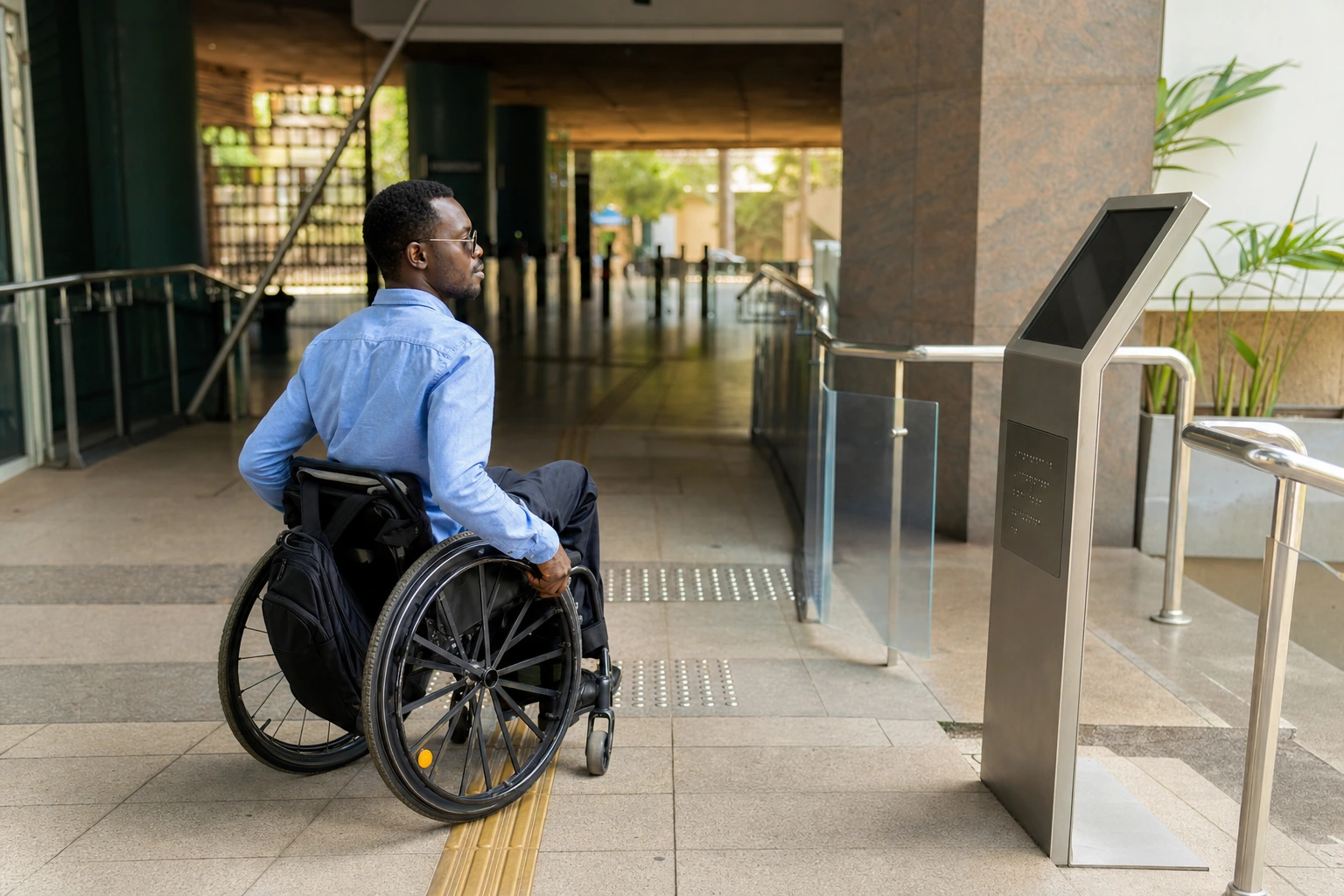
Disability rights are human rights. They protect the dignity, independence, equality and participation of persons with disabilities in everyday life. A person should not lose access to education, work, healthcare, justice, public services or community life because of a physical, sensory, intellectual or psychosocial disability.
Understanding these rights is important for everyone. Persons with disabilities and their families need to know what fair treatment looks like. Employers, educators, public officials, service providers and community leaders need to understand their responsibilities. The central question is not whether a person can fit into an inaccessible system, but whether systems can remove unnecessary barriers and include everyone.
What disability means in a human rights context
Disability is often described only in terms of an individual's condition. A person may have a mobility, visual, hearing, speech, intellectual, psychosocial or other impairment. However, a human rights approach recognises that disability also develops through the interaction between an impairment and barriers in society.
For example, a wheelchair user may be unable to enter a building because of stairs, not because of the wheelchair itself. A deaf learner may be excluded from a lesson because no interpretation or suitable communication is provided. A person with a psychosocial disability may be denied employment because of assumptions about their ability, even when they can perform the work with appropriate support.
This distinction matters because it changes the response. A purely medical approach may focus on treating or managing an impairment. A rights-based approach also asks what changes are needed in the environment, communication, policies and attitudes so that the person can participate on an equal basis.
Key principles of disability rights
Equality and non-discrimination
Persons with disabilities have the right to equal protection and benefit of the law. Discrimination can be direct, such as refusing to admit a qualified learner because they have a disability. It can also be indirect, such as applying a rule that appears neutral but excludes people who need an alternative method.
Discrimination may occur because of disability itself or because of assumptions, stigma or fear. It can also happen when a person is treated unfairly because they use an assistive device, have a disability-related expense, support a disabled family member or are believed to have a disability.
Dignity, autonomy and choice
Every person with a disability should be treated as an individual with their own preferences, abilities and decisions. Support should not automatically become control. Adults with disabilities should, as far as possible, make decisions about their education, work, healthcare, relationships, finances and living arrangements.
Family members and professionals may provide assistance, but assistance should respect the person's will and preferences. Speaking directly to a person rather than only to an accompanying relative is a simple but important expression of dignity.
Accessibility
Accessibility means that people can reach, enter, understand and use places, services, information and technology. It includes more than ramps. A building may need clear routes, accessible toilets, suitable signage, lifts or safe parking. A public meeting may require sign language interpretation, captioning, good acoustics or materials in accessible formats.
Digital accessibility is equally important. Websites, online learning platforms, mobile applications and electronic documents should be designed so that people using screen readers, keyboard navigation, magnification or other assistive technologies can use them. Information that is available only in a scanned image, for example, may be inaccessible to a screen-reader user.
Participation and inclusion
Persons with disabilities have the right to participate in decisions that affect their lives. Consultation should be genuine, accessible and early enough to influence the outcome. Inviting a disability organisation after a policy has already been finalised is not the same as involving people during planning.
The principle is often expressed as “Nothing about us without us”. It means that lived experience should inform laws, services, workplace policies, school arrangements, transport planning and community projects.
Reasonable accommodation: removing individual barriers
Accessibility usually concerns the design of systems for a broad range of users. Reasonable accommodation concerns a particular person. It means making necessary and appropriate adjustments that enable a person with a disability to enjoy or exercise a right on an equal basis with others.
Examples include providing examination time in an appropriate format, adjusting a work schedule where practicable, supplying accessible documents, allowing a support person, moving a meeting to an accessible room, installing suitable software or adapting a communication method. The correct adjustment depends on the person and the situation.
Reasonable accommodation is not the same as giving an unfair advantage. Its purpose is to remove a disadvantage created by an inaccessible arrangement. It is also different from lowering essential standards. An employer may adjust how a task is performed while retaining the genuine requirements of the job.
When requesting accommodation, a person can explain the barrier, describe the adjustment that would help and provide relevant supporting information where required. An institution should respond respectfully and consider practical alternatives rather than rejecting the request automatically. Whether an adjustment is reasonable may depend on factors such as its effectiveness, practicality and cost, but cost should not be used as a vague excuse without proper consideration.
Rights in important areas of life
Education
Children and adults with disabilities have the right to learn without discrimination. Inclusive education aims to enable learners with and without disabilities to learn together, while providing the support needed for meaningful participation.
Support may include accessible buildings, individual learning plans, assistive technology, sign language, Braille, additional time, adapted learning materials, classroom support or alternative ways to demonstrate understanding. Placement decisions should not be based solely on a diagnosis or assumption that a learner cannot succeed.
Parents, guardians and learners should ask schools how they identify support needs, communicate with families, protect against bullying and handle examinations. A school that welcomes admission but provides no practical access or support may still create exclusion in practice.
Employment and entrepreneurship
Employment rights include fair recruitment, equal pay for work of equal value, safe working conditions, training, promotion and protection from harassment. Employers should assess candidates and employees according to relevant skills and performance, not stereotypes.
Recruitment processes can create avoidable barriers. An online application may not work with assistive technology; an interview venue may be inaccessible; or a written test may measure handwriting rather than the ability needed for the job. Employers can improve fairness by making application channels accessible, asking candidates what adjustments they need and focusing assessments on essential duties.
Persons with disabilities also have the right to pursue self-employment and entrepreneurship. This may involve access to business training, finance, markets, premises, digital tools and public procurement opportunities. A disabled entrepreneur should not be treated as a charity beneficiary when they are a business owner, employer or professional.
Healthcare
Healthcare services should be available without discrimination and provided with respect for informed decision-making, privacy and dignity. A disability does not justify ignoring a patient's choices or speaking about them as though they are absent.
Accessibility may require clear information, physical access, communication support, longer appointments, easy-to-understand explanations or assistance with booking systems. Healthcare workers should distinguish a person's disability from unrelated medical concerns and avoid assuming that every symptom is caused by the disability.
Consent is important. Where a person needs communication or decision-making support, the aim should be to help them understand and express their wishes. Support should not be used as a reason to exclude the person from decisions about their own body and treatment.
Access to justice
Persons with disabilities must be able to report abuse, seek advice, give evidence, participate in proceedings and understand decisions. Courts, police stations, tribunals and legal aid services should consider physical, communication and procedural barriers.
Practical measures may include accessible buildings, interpretation, plain-language explanations, alternative communication methods, appropriate support during interviews and sufficient time for participation. Legal professionals should communicate directly with the person and protect confidential information.
When a right is denied, keeping a clear record can help. Note the date, place, people involved, what happened, the right or service affected and any response to a request for accommodation. Depending on the issue and country, a person may seek internal review, a school or workplace grievance process, a relevant public body, a human rights institution, an ombudsman, a regulator or legal assistance.
Family life, safety and privacy
Persons with disabilities have the right to family and community life, personal privacy and protection from violence, exploitation, neglect and abuse. Dependence on another person for support can increase vulnerability, but it does not remove legal rights.
Organisations working with disabled people should use safeguarding procedures, accessible complaints systems and clear rules on confidentiality. Families and carers should also respect private information, personal relationships and the person's right to communicate concerns safely.
Legal frameworks and responsibilities
Disability rights are protected through several layers of law and policy. Internationally, the United Nations Convention on the Rights of Persons with Disabilities sets out a broad framework based on equality, accessibility, participation, autonomy and inclusion. Countries may also protect these rights through constitutions, disability-specific legislation, equality laws, education laws, employment rules and court decisions.
In Kenya, the Constitution of 2010 recognises specific rights of persons with disabilities, including respect and protection of dignity, access to education and facilities, use of sign language, Braille or other appropriate means of communication, and access to public places, transport and information. Kenya also has disability-specific legislation and institutions that support implementation. Because laws, regulations and procedures can change, a person seeking a remedy should check the current wording and obtain advice from an appropriate legal or disability rights organisation.
Responsibility is shared. Government has duties to make laws, services and public infrastructure inclusive. Schools and employers must prevent discrimination and consider accommodation. Businesses should design accessible products and services. Families and communities should challenge stigma while respecting autonomy. Persons with disabilities themselves are rights-holders, not merely recipients of welfare.
Common misunderstandings to avoid
- “Accessibility only means a ramp.” Accessibility also includes communication, information, transport, digital systems, toilets, signage, policies and attitudes.
- “Treating everyone identically is always fair.” Equal treatment may require different support where people face different barriers. Fairness means equal opportunity to participate.
- “A disability automatically means inability.” A disability does not reveal a person's skills, judgement, interests or capacity to work.
- “A family member can always decide for the person.” Support should help the person express and exercise their own rights wherever possible.
- “Inclusion is only a social responsibility.” Excluding someone from a service, opportunity or decision may also raise legal and human rights concerns.
Applying This in Practice
- Identify the barrier. Describe what prevents access: stairs, inaccessible documents, unclear communication, a rigid schedule, an online form or a discriminatory assumption.
- Identify the right or opportunity affected. Consider whether the barrier affects education, work, healthcare, transport, information, voting, justice, privacy or participation.
- Request a specific adjustment. Explain what would make participation possible, such as captioning, accessible files, a different appointment arrangement or a suitable entrance.
- Communicate in writing where practical. A clear request creates a record and gives the institution an opportunity to respond.
- Escalate carefully if necessary. Use the organisation's complaints or review process, then seek guidance from a disability rights group, human rights body, legal aid provider or relevant authority.
- Include people with disabilities in planning. Ask users what works, test the arrangement and improve it based on experience rather than assumption.
For employers, schools and service providers, a useful review begins with three questions: Who may be excluded by the current arrangement? What reasonable changes would remove the barrier? How will the organisation monitor whether people can participate in practice?
Key Takeaways
- Disability rights protect equality, dignity, autonomy, accessibility and participation.
- Barriers in buildings, information, technology, policies and attitudes can create disability-based exclusion.
- Reasonable accommodation removes an individual barrier without abandoning genuine educational or professional standards.
- Persons with disabilities should participate in decisions that affect them and be treated as rights-holders.
- Education, employment, healthcare, justice, privacy and safety must be accessible and non-discriminatory.
- When a right is denied, describe the barrier, request an adjustment, keep records and seek an appropriate remedy.
No comments yet.