
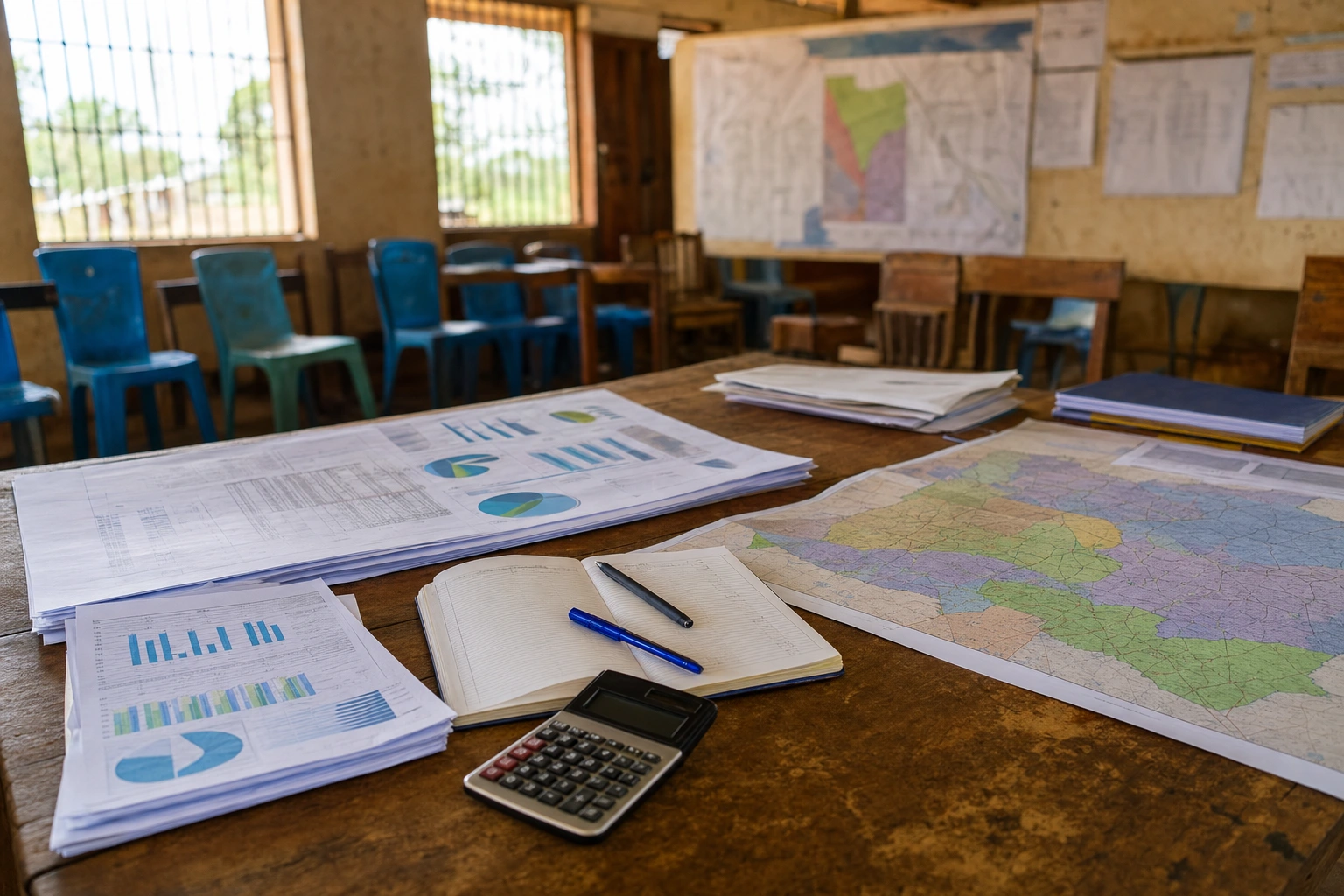
Public participation in budget processes gives citizens an opportunity to influence decisions about public money. It connects community needs with government planning by allowing residents, civil society organisations, businesses, professionals and other stakeholders to examine proposals, make recommendations and question spending choices.
Participation is more than attending a public meeting. Meaningful involvement requires timely information, accessible forums, respectful listening, clear feedback and continued monitoring. Whether the process concerns a county government in Kenya, a municipality, a school board or a national institution, citizens are more likely to influence a budget when they understand the stages, prepare evidence and present practical priorities.
What Public Participation in Budgeting Means
A public budget is a plan showing how an institution expects to raise and use money during a particular period. It normally includes expected revenue, proposed expenditure, development projects, recurrent costs and financing decisions. Public participation allows people affected by these decisions to contribute before the budget is approved and, in some cases, while it is being implemented and reviewed.
Participation can involve:
- Reviewing budget proposals and development plans.
- Identifying community needs and ranking them by urgency.
- Attending public hearings, ward meetings or sector forums.
- Submitting written memoranda, petitions or recommendations.
- Asking questions about revenue, expenditure, procurement and project progress.
- Monitoring approved projects and reporting gaps or misuse.
The purpose is not to ensure that every request is funded. Public resources are limited, and governments must balance competing needs. The purpose is to improve the quality, fairness and accountability of decisions by bringing local knowledge and public scrutiny into the process.
Why Participation Matters
It improves the relevance of public spending
Government officials may have technical information about budgets, but residents often understand local conditions in greater detail. A community can identify which road becomes impassable during rain, which health facility lacks essential equipment or which water point serves several villages. This local knowledge can help decision-makers distinguish between visible projects and genuinely urgent needs.
It promotes accountability
When proposals, allocations and implementation reports are made available for public review, it becomes easier to ask whether money was used for the intended purpose. Participation creates a record of what communities requested and what government promised. This record can support follow-up questions when a project is delayed, poorly constructed or not delivered.
It supports fairness and inclusion
Budgets affect people differently. Women, young people, older persons, people with disabilities, small traders, farmers and residents of remote areas may experience public services in different ways. A process that actively seeks their views is more likely to identify barriers that a general discussion might overlook.
It strengthens public trust
People may accept a difficult decision more readily when they understand how it was reached and why some priorities were selected over others. Trust does not require government to approve every proposal. It requires transparent reasoning, respectful engagement and feedback about what happened to public recommendations.
Understanding the Budget Process
The exact timetable and documents vary between countries and levels of government, but most public budget processes follow a broad sequence.
- Planning and priority setting: Government identifies development objectives, expected revenue and major service needs. Plans may cover several years, while budgets usually cover one financial year.
- Preparation of proposals: Departments and agencies estimate the cost of programmes, projects, salaries, supplies and other activities. They may also propose new projects or changes to existing services.
- Public consultation: Citizens and stakeholders review proposals and submit views through hearings, meetings, written submissions or digital channels.
- Legislative review and approval: An elected assembly or parliament examines the proposed budget, may amend it and formally approves the authorised spending.
- Implementation: Government collects revenue, releases funds and delivers programmes or projects. Procurement and contract management often occur during this stage.
- Monitoring and oversight: Citizens, oversight bodies, assemblies and audit institutions examine whether spending and results match approved plans.
- Reporting and evaluation: Institutions report on revenue, expenditure and performance. These reports can inform the next budget cycle.
Public participation should not be treated as a single event at the consultation stage. Early involvement helps shape priorities, while later involvement helps assess whether promises were delivered.
Participation in the Kenyan Context
Kenya’s system of devolved government makes public participation especially relevant at county and local levels. The Constitution recognises public participation as a principle of governance and requires public involvement in certain public finance and legislative processes. County governments also use planning, budgeting and public consultation mechanisms to identify and prioritise local development needs.
In practice, residents may encounter forums linked to county plans, sector priorities, budget proposals, development projects or budget implementation reports. The names, dates and procedures can differ between counties and financial years. Citizens should therefore check official notices from the relevant county department, assembly, ward office or public finance office rather than relying only on informal messages.
Kenyan participants should also distinguish between different institutions. A county executive may prepare proposals and implement approved programmes, while the county assembly examines and approves budgets and performs oversight. National ministries, agencies, county governments and public entities have different responsibilities. Directing a request to the wrong institution can weaken an otherwise strong submission.
What Makes Participation Meaningful?
Meaningful participation has several characteristics.
Access to useful information
People cannot comment intelligently on a proposal they cannot see or understand. Information should be provided early enough for participants to review it, in a form that is reasonably accessible. Useful material may include proposed allocations, project lists, revenue estimates, performance information and explanations of major changes.
Inclusive opportunities
Holding one meeting in a distant location at an inconvenient time may exclude many people. Stronger processes consider language, disability access, transport, digital access, work schedules, gender-related barriers and the needs of people living in remote areas. Different channels may be necessary, including ward meetings, written submissions, radio discussions, online platforms and targeted sector consultations.
Evidence-based contributions
Participants should explain the problem, identify who is affected, provide supporting evidence and suggest a realistic response. A clear submission is more useful than a long list of general demands. Evidence might include photographs, service records, community surveys, school enrolment information, clinic observations or documented experiences.
Feedback and traceability
After consultation, the public should be able to see whether recommendations were accepted, modified or rejected, and why. This does not always happen perfectly, but participants can request a response and keep records of submissions, attendance and commitments. Without feedback, consultation risks becoming a symbolic exercise rather than a genuine influence on decisions.
How to Prepare an Effective Budget Submission
A practical submission can follow these steps.
- Identify the responsible institution. Decide whether the issue belongs to a county department, national ministry, local authority, public agency or another body.
- Define one priority clearly. State the specific problem rather than using broad wording such as “improve infrastructure”. For example, identify a particular access road, market facility, water system or health service.
- Describe the people affected. Explain the location, the groups involved and how the problem affects livelihoods, safety, education, health or local business.
- Gather credible evidence. Use observations, photographs, service data, written complaints, community records or information obtained through lawful public information channels. Separate confirmed facts from estimates and personal opinions.
- Suggest a proportionate solution. The request might be a feasibility assessment, repair, maintenance allocation, staffing adjustment, training programme or phased construction. Avoid assuming that a large new project is always the best answer.
- Explain the expected benefit. Show what would improve, for whom and within what reasonable period.
- Submit through the correct channel. Follow the published instructions and keep proof of delivery, such as a stamped copy, acknowledgement message or submission reference.
- Follow up respectfully. Ask for the response, the decision taken and, if approved, the implementation timetable and responsible office.
For instance, a group of small traders in a Kenyan market might not simply request “more support”. They could document poor drainage, explain how flooding damages stock and interrupts trading, propose a costed drainage and maintenance intervention, and ask which department will manage it. This approach connects a specific problem to a practical budget action.
How to Assess a Budget Proposal
When reading a proposed budget, consider more than the size of an allocation. Ask the following questions:
- What problem is the allocation intended to solve?
- Who will benefit, and who may be left out?
- Is the amount for a new project, maintenance, staffing, supplies or debt-related costs?
- Does the proposal identify a location, timeframe, responsible department and expected result?
- Is the proposed activity consistent with an approved development or sector plan?
- What evidence shows that the project is needed?
- Are there ongoing projects that should be completed before new ones begin?
- What risks could delay delivery or increase the cost?
- How will residents know whether the promised result has been achieved?
It is also important to distinguish between an allocation and an actual expenditure. A budget may authorise spending, but implementation can be affected by revenue collection, procurement, cash releases, legal challenges, changing priorities or other constraints. Monitoring should therefore examine both the approved plan and the implementation reports.
Common Weaknesses and How to Address Them
Participation happens too late
If people are invited only after major decisions have been made, their influence may be limited. Participants can ask for earlier publication of plans and propose regular consultation throughout the cycle.
Meetings become a competition for attention
Large public meetings may reward the loudest voices rather than the strongest evidence. Facilitators can improve the process by using agendas, time limits, written submissions, small-group discussions and clear criteria for ranking priorities.
Priorities are not ranked
A long list of requests is difficult to assess. Communities can rank proposals according to urgency, number of people affected, legal or safety concerns, feasibility, equity and the likely public benefit. Ranking does not guarantee funding, but it makes the community’s reasoning clearer.
People do not receive feedback
Participants should request a written response or a record of decisions. Community groups can maintain a simple tracking table showing the proposal, date submitted, responsible office, response received, approved amount and implementation status.
Promises are confused with commitments
A statement made at a meeting is not necessarily an approved budget allocation. Participants should verify whether a proposal appears in an authorised budget, procurement plan, project list or implementation report before presenting it as a government commitment.
Applying This in Practice
Individuals and community organisations can use a simple participation routine during each budget cycle:
- Find the official consultation timetable and relevant budget documents.
- Discuss local needs with affected groups rather than relying on one person’s priorities.
- Choose a small number of well-supported proposals.
- Prepare a one- to three-page submission using clear headings and plain language.
- Attend the appropriate forum and present the request briefly and respectfully.
- Record the response, promised action, responsible office and expected timeframe.
- Check implementation using site visits, public reports, service-user feedback and lawful information requests.
- Report unresolved concerns through the proper oversight, administrative or accountability channels.
Professionals can contribute by helping communities interpret financial documents, estimate costs, map affected areas or design monitoring tools. Businesses can explain how public infrastructure affects local commerce without turning the process into a private lobbying exercise. Community leaders can make forums more inclusive by ensuring that less powerful voices are heard, not only those who already have access to officials.
Good participation combines rights with responsibility. Citizens should ask informed questions, avoid spreading unverified allegations, respect other people’s priorities and distinguish public benefit from individual advantage. Public officials, in turn, should provide understandable information, manage forums fairly and explain decisions. Both sides contribute to a budget process that is more credible and useful.
Key Takeaways
- Public participation allows people to influence public priorities before budgets are approved and to monitor delivery afterwards.
- Effective contributions identify a specific problem, affected groups, evidence, a realistic solution and the expected public benefit.
- Participation should be early, inclusive, accessible and supported by clear information and feedback.
- Always identify the institution responsible for the issue and submit proposals through the correct official channel.
- Distinguish between a public promise, a budget allocation and actual implementation.
- Keep records of submissions, responses, commitments and project progress to support responsible follow-up.
No comments yet.