
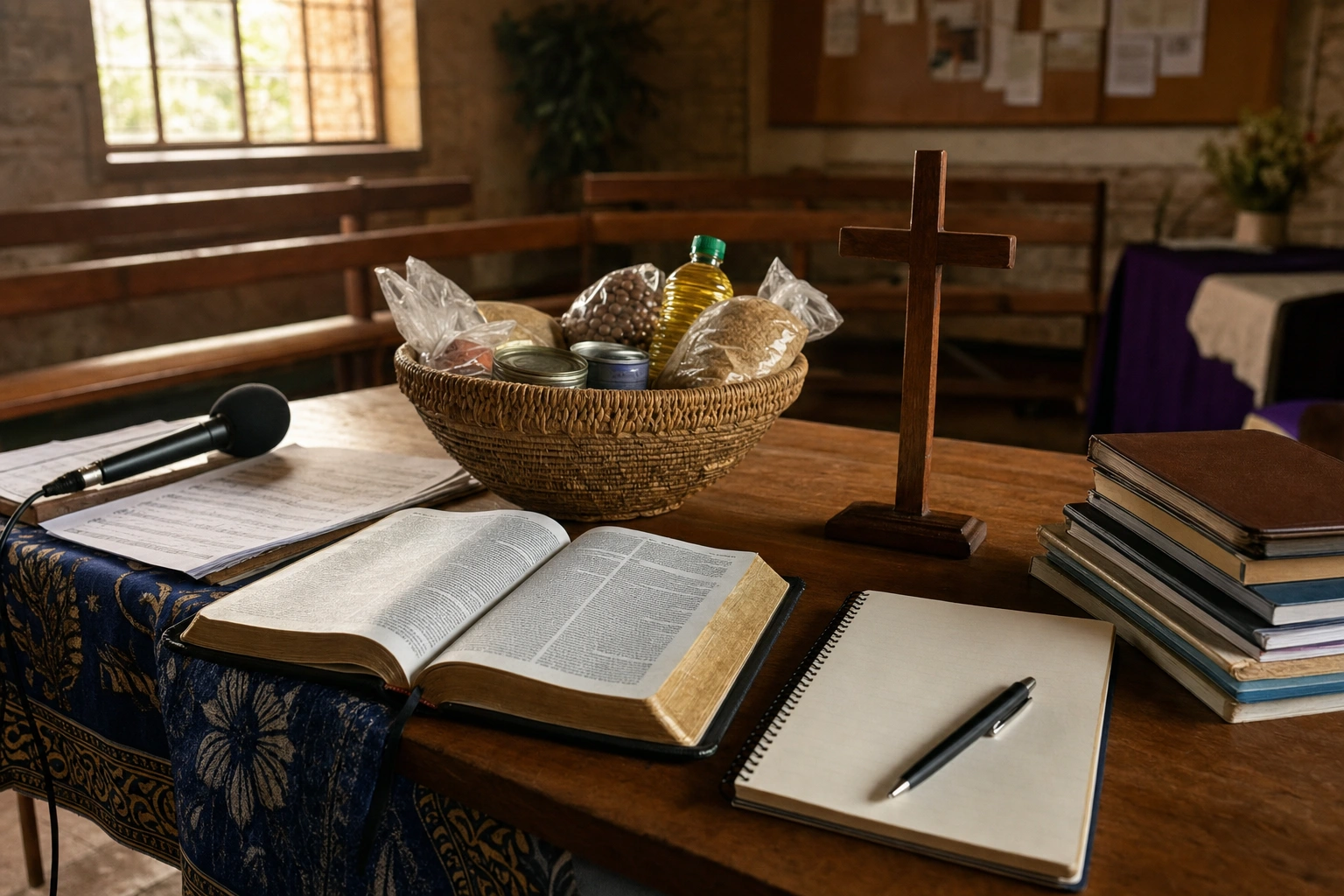
Christian ministry is the work of serving God and serving people in ways that express the message, character and mission of Jesus Christ. The word ministry is often associated with ordained clergy, pastors or church leaders, but Christian teaching presents a broader picture: every believer may contribute to the life and witness of the church through spiritual gifts, practical abilities, personal character and faithful relationships.
Different churches organise ministry in different ways. Some emphasise ordained offices, others focus strongly on spiritual gifts, and many combine both approaches. The names and boundaries may vary, but the central purpose remains similar: to help people grow in faith, care for one another, proclaim the gospel and serve the wider community. Understanding these forms of ministry helps Christians identify opportunities for service without assuming that only public or paid roles are important.
What Christian Ministry Means
In ordinary language, ministry means service. In the New Testament, Christian ministry is connected with serving Christ by serving others. Jesus presented leadership as service rather than domination, teaching his disciples that greatness is expressed through giving oneself for the good of others. This principle shapes every form of Christian ministry, whether it involves preaching to a congregation, visiting a sick person, organising food support or quietly encouraging a young believer.
Ministry has at least three connected dimensions:
- Worship: directing people towards God through prayer, praise, teaching and the sacraments or ordinances recognised by a particular church.
- Formation: helping people understand Christian faith and develop mature, faithful lives.
- Mission: sharing the gospel and demonstrating Christ's love through service, justice, mercy and responsible engagement with the community.
These dimensions should not be treated as isolated departments. For example, a church food programme may meet immediate needs while also expressing compassion, building relationships and creating opportunities for respectful spiritual conversation. Likewise, teaching is not simply the transfer of information; it should shape judgement, character and conduct.
Ministry of All Believers
A foundational Christian idea is that the whole church is called to serve. Passages such as 1 Peter 2:9 describe believers as a people called to proclaim God's works, while 1 Corinthians 12 uses the image of one body with many members. These teachings challenge the assumption that ministry belongs only to a priest, pastor or minister.
The ministry of all believers does not mean that everyone performs the same task. It means that all Christians have responsibilities within the community of faith. One person may teach children, another may care for elderly members, another may manage finances honestly, and another may welcome newcomers. Some forms of service are highly visible; others happen privately and may never receive public recognition.
This principle is especially important in local congregations where resources may be limited. In a rural Kenyan church, for instance, members may share responsibility for Bible study, youth support, music, practical maintenance and visiting households. Such participation is not merely a way to fill gaps in church administration. It reflects the understanding that the church is a community in which members contribute to one another's wellbeing.
Ordained and Recognised Leadership Ministries
Many Christian traditions appoint or recognise leaders who carry particular responsibility for teaching, worship, pastoral care and oversight. The titles differ across denominations, but the central concern is that leaders should serve the church faithfully, exercise authority responsibly and meet appropriate spiritual and ethical expectations.
Pastoral ministry
Pastoral ministry involves caring for people and guiding a congregation. A pastor may preach, teach, lead worship, offer spiritual counsel, visit the sick, support families during bereavement, prepare people for important Christian ceremonies and help the church respond to community needs. Pastoral work combines public leadership with patient, often unseen care.
Good pastoral ministry is not simply a matter of being an impressive speaker. It requires listening, discretion, sound judgement, emotional maturity and an ability to apply Christian teaching to real circumstances. A pastor may need to support a couple in conflict, help a young adult make a difficult decision, respond to a bereaved family or refer someone to professional help when a situation exceeds the pastor's training.
Teaching and preaching ministry
Teaching ministry helps people understand the Bible, Christian doctrine and the practical implications of faith. It may take place through sermons, Bible studies, Sunday school, theological education, small groups or online learning. Preaching generally proclaims and applies the Christian message, while teaching often gives more sustained attention to explanation, interpretation and formation. In practice, the two frequently overlap.
Responsible teaching requires careful reading of Scripture, awareness of context and humility about difficult questions. Teachers should distinguish between what a biblical passage clearly states, what is a reasonable interpretation and what is a personal opinion. This is particularly important when addressing sensitive matters such as marriage, money, suffering, politics or relationships between Christians and other faith communities.
Episcopal, presbyteral and diaconal forms of leadership
Churches arrange leadership in different ways. In some traditions, bishops provide oversight over groups of congregations, while priests or presbyters lead local churches. In other traditions, elders share responsibility for governance and spiritual oversight. Deacons commonly assist with service, worship, pastoral support or care for people in need, although the exact role varies between churches.
These structures should not be confused with a ranking of personal worth. They are different patterns of responsibility and accountability. A church may use a formal office, a ministry team, a council of elders or another arrangement. Whatever the structure, healthy leadership should be transparent, accountable and directed towards the good of the congregation rather than personal control.
Worship and Liturgy Ministry
Worship ministry includes the many forms of service that help a congregation gather before God. It may involve musicians, singers, worship leaders, readers, instrumentalists, people who prepare the communion table, ushers, technical teams and those who arrange the worship space. In traditions that follow a formal liturgy, it may also involve people responsible for specific readings, prayers, processions or sacramental preparation.
Worship ministry is more than performance. Music and other creative contributions should support congregational participation rather than turn worship into a platform for individual display. A skilled worship team considers the congregation's ability to sing, the meaning of the words, the balance between different generations and the overall purpose of the service.
Practical preparation also matters. Ensuring that older members can hear, helping visitors find their way, providing accessible seating and communicating clearly about the order of service are acts of hospitality. They make it easier for people to participate with dignity.
Evangelism and Missionary Ministry
Evangelism is the ministry of communicating the good news of Jesus Christ and inviting people to respond. It may occur through personal conversations, preaching, community events, digital communication, campus ministry or long-term relationships. Evangelism should respect the dignity and freedom of those who hear the message. It is not the same as manipulation, pressure or using practical assistance to force religious commitment.
Missionary ministry extends Christian witness across cultural, geographical or social boundaries. Missionaries may teach, plant churches, translate resources, train local leaders, provide medical or educational support, or work alongside communities in development and relief. Effective mission requires cultural humility. Workers need to listen carefully, learn local languages and customs where possible, avoid treating one culture as automatically superior and support local believers rather than creating unnecessary dependence.
In contemporary settings, mission is not limited to travel overseas. A Christian professional who acts with integrity in a Nairobi workplace, a student who supports a struggling classmate or a congregation that serves refugees may all participate in the church's mission. The setting changes, but the principles of faithful witness, compassion and respect remain relevant.
Pastoral Care, Counselling and Healing Ministry
Pastoral care is the ministry of accompanying people through the ordinary and difficult experiences of life. It includes visiting the sick, supporting those who are grieving, praying with people, offering encouragement and helping individuals remain connected to the community. It can take place in homes, hospitals, schools, prisons, workplaces and church groups.
Some Christians are also called to counselling or healing ministries. These forms of service must be practised responsibly. Prayer can be offered with compassion, but spiritual care should not replace medical treatment, psychological support or protection from abuse. A ministry worker should recognise the limits of their competence and refer people to qualified professionals when there is serious illness, risk of self-harm, domestic violence, child protection concerns or complex mental-health needs.
Confidentiality is also important, although it has limits where someone is in danger or where safeguarding responsibilities apply. Trust is built when ministry workers listen without gossiping, avoid making promises they cannot keep and treat vulnerable people with respect.
Discipleship and Christian Education
Discipleship ministry helps people follow Christ in an ongoing and practical way. It may include mentoring, confirmation or membership classes, youth groups, men's and women's fellowships, small groups, prayer groups and courses for new believers. The aim is not merely to increase attendance or knowledge, but to develop people who can think carefully, live faithfully and serve others.
Effective discipleship connects belief with everyday decisions. A study on stewardship might examine how a Christian manages income, debt and generosity. A discussion on reconciliation might explore conflict at home or work. A lesson on justice might lead a congregation to examine how it treats employees, neighbours or vulnerable people. This approach helps learners move from hearing Christian ideas to practising them.
Children's and youth ministry requires particular care. Leaders should create environments that are safe, age-appropriate and respectful. They should follow safeguarding procedures, maintain suitable boundaries and avoid placing children in situations where they are isolated or vulnerable. Spiritual enthusiasm must always be matched by responsible care.
Service, Mercy and Community Ministry
Christian service ministry responds to practical needs and seeks the wellbeing of neighbours. It may involve food distribution, visiting prisoners, supporting people living with disabilities, responding to disasters, offering literacy programmes, caring for the environment or assisting families facing hardship. Some churches operate formal projects; others serve through partnerships with established community organisations.
Mercy ministry should preserve dignity. People in need should not be treated as projects, publicity opportunities or passive recipients who have no voice. A wise programme listens to the community, identifies actual priorities, manages resources transparently and considers whether its methods promote long-term wellbeing.
For example, a church supporting small-scale farmers might combine immediate relief after crop failure with training, savings groups or links to agricultural advice. The exact response will depend on local circumstances. The important point is that practical service can be thoughtful, accountable and responsive rather than improvised solely around what the church wants to provide.
Administration, Finance and Professional Ministry
Administration is often overlooked because it happens behind the scenes, yet churches cannot function well without reliable organisation. Administrators, treasurers, secretaries, safeguarding officers, project coordinators and facilities teams help congregations use time, money and buildings responsibly.
Financial ministry includes budgeting, record-keeping, authorising expenditure, reporting to members and protecting funds from misuse. Christian stewardship requires honesty and accountability. A church's spiritual purpose does not remove the need for sound controls; it makes responsible management even more important because donated resources are entrusted for a purpose.
Professionals may also serve through legal knowledge, teaching, medicine, counselling, information technology, communications, engineering or business skills. Such contributions should not be regarded as less spiritual than preaching. The question is whether a person's abilities are being used ethically and for the benefit of others.
How to Discern a Ministry Role
Choosing a ministry role involves more than selecting the most visible opportunity. Several questions can help:
- What needs exist? Observe the congregation and community. There may be a need for childcare, transport, translation, financial skills, mentoring or visits rather than another public speaker.
- What abilities and experience do you have? Consider both formal skills and personal strengths, such as patience, organisation, hospitality, empathy or the ability to explain complex ideas clearly.
- What do trusted Christians recognise in you? Mature feedback can reveal gifts that you may overlook, while also identifying areas where further training is needed.
- What responsibilities can you carry faithfully? Ministry should fit realistically with family, employment, health and other obligations. Overcommitment can harm both the worker and the people being served.
- What training and accountability are required? Roles involving children, finances, counselling or leadership usually need clear procedures and appropriate preparation.
- What fruit is being produced? Look for evidence of greater care, truthfulness, growth, reconciliation, service and participation rather than popularity alone.
Applying This in Practice
A church or small group can make ministry more accessible by mapping its needs and gifts. Begin by listing current responsibilities and unmet needs. Then invite members to describe skills, experiences and areas of interest without assuming that everyone must serve publicly. Match people carefully, provide induction and agree on the boundaries of each role.
For an individual learner, a practical starting point may be to choose one small, consistent act of service for a defined period. This could be helping with welcoming, joining a visitation team, mentoring a younger believer, supporting a community project or assisting with church administration. After several weeks, reflect with a trusted leader: What was helpful? What was difficult? What training is needed? Did the role strengthen or exhaust you? Honest reflection helps turn enthusiasm into sustainable service.
Leaders should also review ministry regularly. A healthy review asks whether the work is faithful to Christian teaching, useful to the people served, safe for vulnerable participants, financially responsible and open to correction. Ministry is not validated simply because it is busy. Its quality is seen in the character of the service and the good it produces.
Key Takeaways
- Christian ministry is service to God and people, not only the work of ordained leaders.
- The whole church can participate through different gifts, skills, responsibilities and forms of care.
- Pastoral, teaching, worship, evangelism, discipleship and community ministries support one another.
- Church leadership structures differ, but faithful ministry requires accountability, humility and responsible use of authority.
- Practical service should protect dignity, respect local needs and use resources transparently.
- People should choose ministry roles through self-awareness, trusted guidance, suitable training and realistic commitments.
No comments yet.