
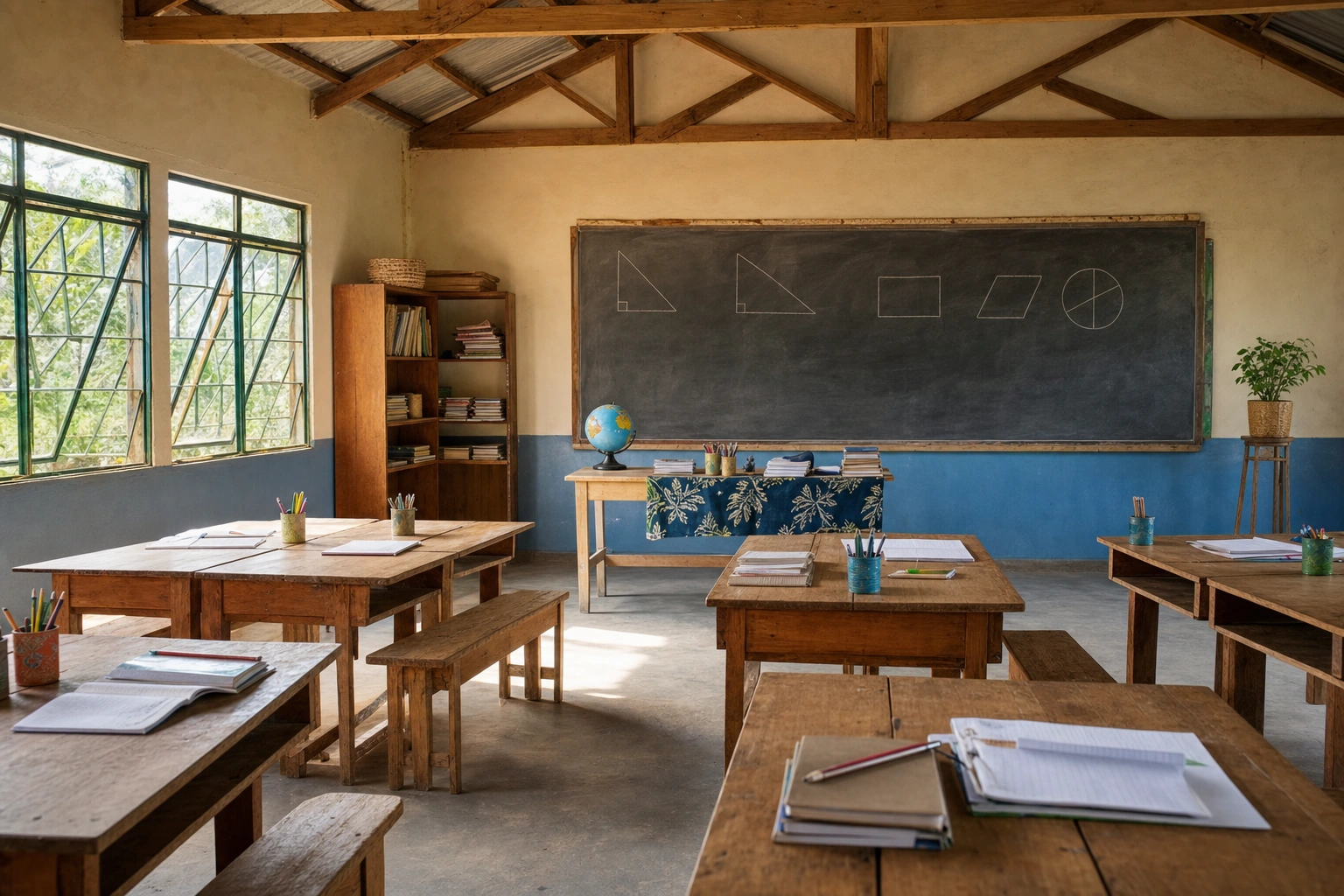
A positive learning environment is more than a tidy classroom or a quiet lesson. It is a learning space in which learners feel safe enough to ask questions, make mistakes, contribute ideas and take responsibility for their progress. The teacher’s routines, language, expectations and responses to behaviour all shape this environment.
Effective classroom management does not depend on controlling every moment or using punishment whenever a problem occurs. It involves designing conditions that make productive learning more likely. Whether you teach in a primary school, secondary school, vocational institution, university or community programme, a supportive environment can improve participation, concentration and relationships.
What a Positive Learning Environment Looks Like
A positive learning environment combines physical, emotional, social and academic conditions. These elements influence one another. For example, overcrowding may make movement difficult, but clear routines can reduce confusion. A learner who feels embarrassed by repeated public correction may stop participating, even if the lesson content is well prepared.
In a positive classroom, learners generally understand:
- What they are expected to learn and how the lesson will proceed.
- Which behaviours support learning and which behaviours disrupt it.
- How to ask for help, contribute to discussion and work with others.
- That mistakes are treated as opportunities to improve rather than reasons for humiliation.
- That rules apply fairly and that concerns can be raised respectfully.
This does not mean that every learner is happy at every moment or that lessons are always silent. Productive discussion, debate, practical work and collaboration can be lively. The important question is whether the activity is purposeful, respectful and connected to learning.
Begin with Relationships and Trust
Learning is strongly affected by the relationship between the teacher and the learner. Trust develops when learners experience consistency, fairness and genuine attention. A teacher does not need to know every personal detail about each learner, but should show interest in their ideas, progress and wellbeing.
Simple practices can make a significant difference. Welcome learners as they enter, learn and use their names correctly, listen without unnecessary interruption, and acknowledge effort as well as achievement. When a learner answers incorrectly, respond to the thinking behind the answer before guiding them towards a better one. This communicates that participation is valued.
Relationships also involve maintaining professional boundaries. Being warm does not mean allowing every behaviour. A teacher can be approachable while still being clear about deadlines, safety, respectful language and academic honesty. In fact, predictable boundaries often make learners feel more secure because they know what to expect.
Use culturally responsive communication
Classrooms may include learners with different languages, cultural practices, religious backgrounds, abilities and family experiences. Avoid assuming that one communication style represents confidence, intelligence or respect. Some learners may be comfortable speaking immediately, while others may need time to think or prefer written participation first.
In a Kenyan classroom, for example, a teacher may need to support learners who speak English as an additional language, alongside learners who are more fluent in Kiswahili or a local language. Clear explanations, visual examples, deliberate pacing and opportunities to check understanding can support everyone without lowering academic expectations.
Set Clear Expectations Before Problems Occur
Rules are most useful when they describe observable behaviour. “Be good” is too vague for learners to apply consistently. More specific expectations include “listen while another person is speaking”, “bring the required materials” and “move safely during practical activities”. Keep the number of core expectations manageable and explain the reason behind each one.
At the beginning of a term, course or new group, discuss expectations rather than simply displaying them. Ask learners what helps them concentrate and what makes learning difficult. You can then connect their ideas to classroom standards. This gives learners a voice while making it clear that the teacher remains responsible for safety and learning.
Expectations should be taught, demonstrated and practised. If learners are expected to enter quietly, begin with a short task and submit work in a particular way, show them the process. Practise it if necessary. Adults and older learners also benefit from explicit routines, especially when they are joining a new course or returning to education after a long break.
Make routines predictable
Routines reduce the number of decisions learners and teachers must make during a lesson. Useful routines may cover:
- Entering the room and preparing materials.
- Starting a lesson or responding to a starter activity.
- Moving into pairs, groups or practical stations.
- Requesting assistance or leaving the room.
- Submitting work and packing away equipment.
- Responding to transitions and the end of the session.
Introduce one routine at a time and explain what success looks like. Give reminders before transitions, not only after disruption begins. In a large class, a visible agenda or simple visual signal can help learners follow the sequence without repeated verbal instructions.
Design Lessons That Support Engagement
Some behaviour problems begin with unclear, inaccessible or poorly paced learning activities. A lesson is more likely to remain focused when learners understand the purpose, can see the steps and have an appropriate level of challenge.
State the learning intention in language learners can understand. Instead of saying, “Today we will cover marketing,” explain, “By the end of the session, you will be able to identify a target customer and write a simple value proposition.” Then connect activities to that purpose. Learners are more likely to engage when they can see why an exercise matters.
Plan for variety without creating unnecessary movement or noise. A lesson might include a brief explanation, an individual thinking task, paired discussion, guided practice and independent application. The balance will depend on the subject, age group, class size and available resources. In a science lesson, practical work may be central; in a literacy lesson, reading, discussion and writing may need different forms of support.
Check understanding frequently. Do not rely only on asking, “Does everyone understand?” Learners may remain silent because they are unsure, embarrassed or distracted. Use short questions, worked examples, mini-whiteboards, exit notes, peer explanation or a quick demonstration. These checks help the teacher identify confusion before it becomes frustration or off-task behaviour.
Respond to Behaviour Fairly and Calmly
Even well-managed classrooms experience disruption. The aim is not to avoid every problem but to respond in a way that protects learning, dignity and safety. Begin with the least intrusive response that is likely to work. This might be moving closer to a distracted learner, pausing briefly, pointing to the relevant expectation or giving a quiet reminder.
When a direct conversation is needed, describe the behaviour and its effect rather than attacking the learner’s character. “The discussion is continuing while another group is presenting, so they cannot be heard” is more useful than “You are being rude.” Then state the next action clearly: “Please listen now; you will have an opportunity to contribute afterwards.”
Use consequences that are proportionate, predictable and connected to the behaviour where possible. If equipment is used unsafely, the learner may need to stop the practical task and review the safety procedure. If work is not submitted, the teacher can establish a clear process for completing it. Consequences should not be humiliating or designed to make an example of someone.
Separate the behaviour from the person
A learner should be held accountable without being labelled as lazy, difficult or unintelligent. Labels can influence how others see the learner and may encourage the learner to act according to the label. Focus on what happened, what needs to change and how the learner can repair any harm.
After a difficult incident, speak privately when possible. Ask questions such as:
- What happened from your point of view?
- Who was affected?
- What were you trying to achieve?
- What needs to happen so learning can continue?
- What support or change would help you meet the expectation next time?
This approach does not remove consequences. It makes them part of learning and responsibility rather than a public contest between teacher and learner.
Build Inclusion and Participation
A classroom may appear orderly while some learners remain excluded. Notice who speaks frequently, who is interrupted, who receives support and who is rarely invited to contribute. Participation should not depend only on speed, confidence or fluency in the dominant language.
Use several routes into learning. Allow learners to think individually before speaking, discuss an answer with a partner, write a response, draw a process or demonstrate a practical skill. Structured group roles can prevent one learner from doing all the work. Roles such as facilitator, recorder, timekeeper and reporter should rotate so that different learners develop different skills.
Make materials and instructions accessible. Break complex tasks into stages, define unfamiliar terms and provide examples of completed work. Where appropriate, offer assistive technology, enlarged materials, additional processing time or alternative ways to demonstrate understanding. Inclusion does not mean giving every learner an identical experience; it means removing unnecessary barriers while preserving meaningful learning goals.
Address bullying, discrimination and ridicule promptly. A positive environment cannot be built by ignoring comments that target a learner’s identity, disability, language, gender, religion or social background. Explain why the behaviour is unacceptable, support the affected learner and follow the relevant institutional safeguarding and discipline procedures.
Use the Physical Space and Available Resources Well
The physical environment affects movement, visibility, collaboration and concentration. Arrange seating according to the learning activity rather than using one layout for every lesson. Rows may support individual assessment, while a horseshoe may support discussion and small groups may suit collaborative tasks.
In a resource-limited setting, effective management does not require expensive equipment. A teacher can use locally available objects, the board, printed cards, learner-generated examples and carefully planned peer teaching. The key is to establish how materials will be distributed, shared and returned. If resources are scarce, clear group responsibilities can prevent arguments and wasted time.
Pay attention to practical details such as ventilation, lighting, noise, safe movement and visibility of the board. Where the room cannot be changed, adjust teaching strategies. For example, a teacher may use brief verbal instructions followed by written steps on the board if the space is noisy or learners are seated far away.
Work with Families, Colleagues and the Wider Community
Classroom management is stronger when adults communicate consistently. If a learner’s behaviour or attendance is causing concern, record relevant observations and follow the institution’s procedures. Speak about specific patterns rather than making broad judgements. “The learner has missed three practical sessions and has not completed the related work” gives a clearer basis for action than “The learner is not serious.”
Families and caregivers can provide useful context, particularly for younger learners, but communication should remain respectful and confidential. For adult learners, consider responsibilities such as employment, childcare, transport and financial pressure without making assumptions. A practical conversation may reveal a barrier that can be addressed through planning, catch-up work or referral to appropriate support.
Teachers should also seek support from colleagues when a situation exceeds their role or expertise. Serious safety concerns, suspected abuse, persistent bullying and significant emotional distress require appropriate institutional action rather than informal promises of confidentiality.
Applying This in Practice
Use the following process when reviewing or improving your classroom management:
- Observe the current environment. Note when learners are most engaged, when disruption occurs and which instructions or transitions create confusion.
- Choose one priority. Focus first on a manageable issue, such as late starts, noisy group work or incomplete instructions.
- Define the expected behaviour. Describe exactly what learners should do and why it supports learning.
- Teach and practise the routine. Demonstrate the steps, allow learners to rehearse them and correct misunderstandings early.
- Use consistent reminders. Refer to the agreed expectation calmly rather than changing the rule from one day to the next.
- Review the result. Ask whether the change improved learning, who benefited and what still needs adjustment.
For example, if group work regularly becomes noisy and unproductive, do not simply tell learners to “work quietly”. Assign group roles, display the task stages, set a time limit, establish a reasonable voice level and explain how groups will report their work. Circulate during the activity and provide feedback on both the quality of the work and the quality of collaboration.
Key Takeaways
- Build a positive environment through safety, respect, clear expectations and meaningful learning.
- Teach routines explicitly and use predictable procedures to reduce confusion.
- Plan engaging, appropriately challenging lessons and check understanding throughout.
- Respond to disruption calmly, privately and proportionately whenever possible.
- Focus on behaviour and its impact rather than labelling the learner.
- Offer different ways to participate so that confidence, language or ability does not become an unnecessary barrier.
- Review classroom practices regularly and seek support when a concern exceeds your role.
No comments yet.