
Christian ethics and care for creation are closely connected. The natural world is not merely a storehouse of materials for human use; it is God’s creation, a setting for human life and a subject of moral responsibility. How people use land, water, animals, energy and other resources therefore raises important ethical questions.
For Christians, environmental responsibility involves more than adopting a few greener habits. It requires reflecting on biblical teaching about creation, human authority, justice, simplicity and love of neighbour. It also calls individuals, churches, businesses and public institutions to examine how their decisions affect vulnerable people and the generations that will follow.
Biblical foundations for caring for creation
The opening chapters of Genesis establish a foundational Christian view of the world. God creates light, land, seas, plants, animals and human beings, and repeatedly describes creation as good. This goodness exists before human beings begin to use the earth. It suggests that creation has value because it comes from God, not only because it serves human purposes.
Human beings are created in the image of God and are given a distinctive role within creation. Genesis 1:28 speaks of filling the earth, subduing it and exercising dominion over other living creatures. These words have sometimes been interpreted as permission for unlimited exploitation. However, Christian interpretation must read them alongside other biblical teachings about responsibility, restraint and service.
Genesis 2:15 describes the human vocation in the garden as working it and keeping it. The language points towards cultivation and protection rather than careless consumption. Humans are placed within creation, not outside it. They depend on soil, water, plants, animals and stable seasons for their existence.
Other biblical passages reinforce this perspective. The Psalms celebrate the earth as belonging to the Lord and portray animals, mountains, rivers and skies as part of a world sustained by God. The laws concerning Sabbath rest included the land and animals, while instructions about allowing fields to rest and leaving resources for the poor connected ecological practice with social justice. In the New Testament, Christ’s reconciling work is described as extending to “all things”, offering a broad vision of restoration rather than one limited only to private spiritual experience.
Dominion, stewardship and responsibility
A central issue in Christian environmental ethics is the meaning of dominion. Dominion should not be confused with domination that is violent, wasteful or indifferent. In the Christian tradition, authority is judged by the character of the one who exercises it. Jesus presents leadership as service, and this principle can shape how humans understand their place in creation.
Stewardship is a useful concept because it emphasises accountability. A steward manages something that ultimately belongs to another person. In Christian thought, the earth belongs to God, while human beings receive responsibility for its care. This does not mean that people may never use natural resources. Food, shelter, transport, farming, industry and technology all require materials from the created world. The ethical question is whether those resources are used wisely, fairly and within responsible limits.
Stewardship also rejects the idea that environmental care is simply a matter of personal preference. If a factory pollutes a river used by households, or if careless land use causes soil erosion that reduces farmers’ harvests, the issue is not only aesthetic. It concerns health, livelihoods, dignity and justice. Responsible stewardship therefore includes personal conduct, community decisions, economic practices and public accountability.
Why environmental harm is an ethical issue
Environmental damage often affects people unevenly. Wealthier households may be able to move away from polluted areas, purchase clean water or recover from failed harvests more easily than poorer households. Communities whose livelihoods depend directly on farming, fishing, forests or livestock can be especially exposed to changes in rainfall, soil quality and access to natural resources.
This raises the Christian principle of love of neighbour. A neighbour is not only the person living next door or belonging to the same church. Ethical concern extends to people who may be affected by decisions made elsewhere, including rural communities, urban residents, workers in supply chains and future generations. It also includes attention to animals and habitats, even though Christian environmental ethics gives particular weight to human dignity and social responsibility.
In Kenya and other African countries, examples can include the protection of water catchment areas, responsible grazing, reducing plastic pollution, preventing unnecessary destruction of forests and supporting farming practices that protect soil. Such concerns should not be treated as imported issues unrelated to faith. They are connected to food security, public health, livelihoods and the biblical call to seek the good of one’s community.
Creation care and Christian virtues
Christian ethics is not based only on rules. It also asks what kind of people Christians should become. Several virtues are especially relevant to care for creation.
- Gratitude: Recognising the world as a gift can challenge an attitude of entitlement. Gratitude encourages people to receive resources with appreciation rather than treating them as limitless.
- Temperance: This virtue involves self-control and appropriate restraint. It questions unnecessary consumption, excessive waste and the belief that having more always means living better.
- Justice: Justice requires attention to who benefits from economic activity and who bears its costs. It asks whether environmental burdens are being placed unfairly on poor or politically marginalised communities.
- Wisdom: Good intentions are not enough. Responsible decisions require learning how ecosystems work, considering long-term consequences and listening to people with relevant knowledge and experience.
- Humility: Human beings are powerful but dependent. Humility accepts that people do not control every consequence of their actions and that creation is more complex than any one generation can fully understand.
- Hope: Christian hope is not an excuse for passivity. It supports faithful action while recognising that human efforts do not create salvation by themselves.
These virtues help prevent two opposite errors. One is apathy, in which environmental problems are ignored. The other is anxiety or moral pride, in which people assume that perfect personal choices are possible or that their own approach is the only faithful one. Christian ethics encourages serious responsibility without losing humility, patience and concern for others.
Consumption, business and economic responsibility
Modern economies make environmental choices difficult because individuals often depend on products and systems they do not control directly. A person may wish to reduce waste while living in a neighbourhood with limited recycling services. A small business may want cleaner energy but face high initial costs. A farmer may understand the value of soil conservation but lack access to equipment, training or finance.
For this reason, Christian care for creation should not be reduced to blaming individuals. Personal choices matter, but institutions and businesses also have responsibilities. Entrepreneurs can examine the materials used in products, the durability of goods, packaging, waste disposal, transport and working conditions. Churches can consider how they use buildings, land, water and energy. Professional leaders can include environmental risks in planning rather than treating them as an afterthought.
Ethical business practice involves asking practical questions. Is a product designed to last, or is it made for rapid disposal? Are suppliers treated fairly? Does the organisation hide environmental costs from customers or communities? Can waste be reduced through repair, reuse or better planning? Are claims about being “green” accurate and proportionate? Honest answers matter because environmental language can itself become a form of marketing without meaningful change.
Creation care and worship
Christian worship can shape attitudes towards the natural world. Prayers of thanksgiving, readings from the Psalms, teaching about creation and services that recognise planting or harvest can remind congregations that life depends on gifts beyond human achievement. Such practices should not remain symbolic. Worship can lead to habits of care, shared action and public witness.
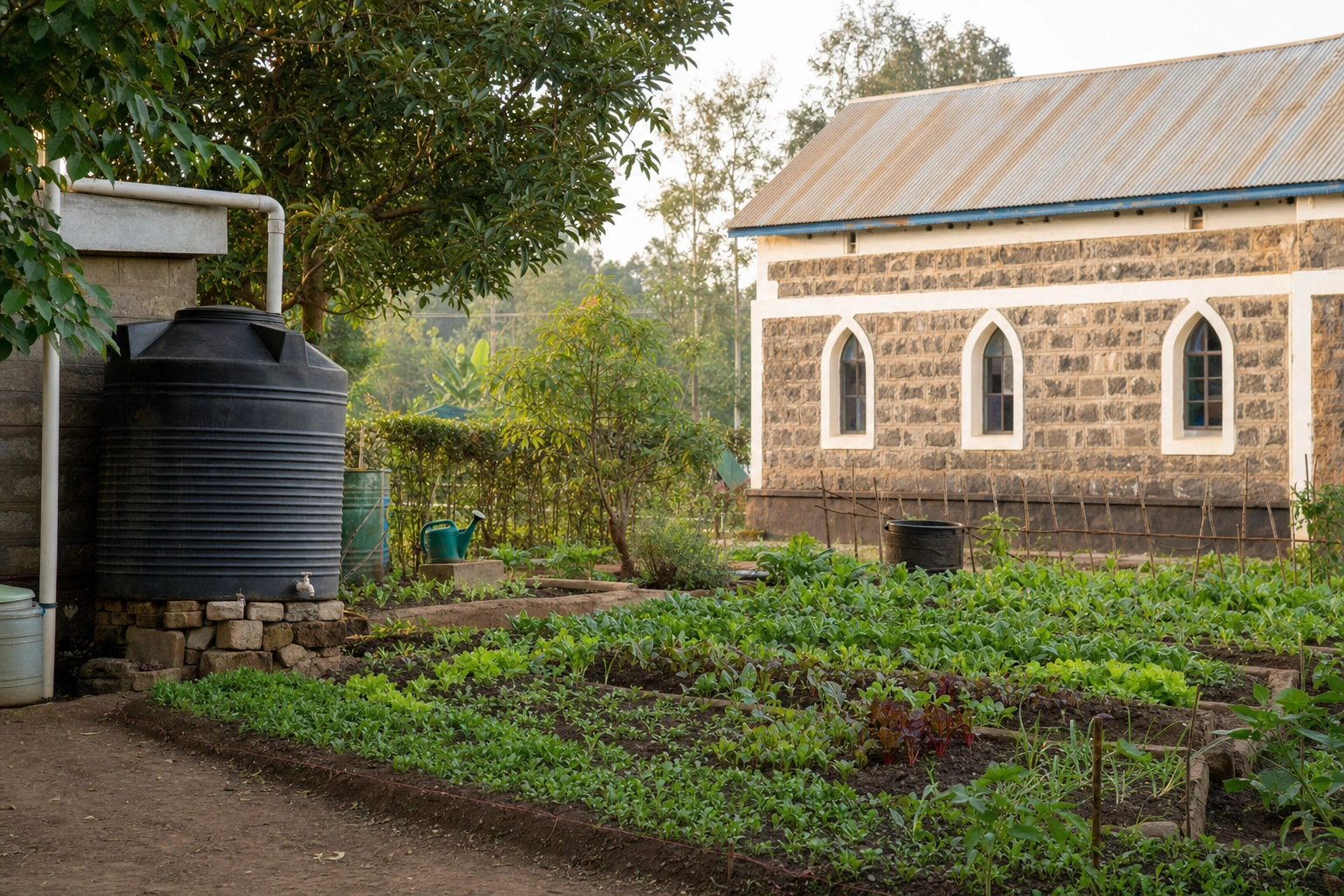
Churches may use their land for tree planting, community gardens or protection of water sources where appropriate. They may reduce unnecessary waste at events, maintain buildings responsibly and support members who are working on environmental or agricultural challenges. They can also create spaces for respectful discussion, especially where environmental decisions involve difficult trade-offs between employment, development and conservation.
Christian communities should avoid presenting environmental concern as belonging to one political party or social group. The theological basis is broader: creation belongs to God, neighbours deserve protection, the poor should not carry unfair burdens and human authority must be exercised responsibly. Christians may disagree about policies while still sharing these moral commitments.
Limits and balance in Christian environmental ethics
Care for creation does not require treating nature as divine. Christianity distinguishes between the Creator and creation. This protects against both exploitation and the worship of the natural world. The earth is valuable, but it is not God.
Nor does creation care mean that every human use of nature is wrong. Farming, housing, roads, hospitals, schools and businesses require land and materials. Ethical judgement must consider purpose, scale, alternatives, harm and fairness. A decision to build a health facility may involve environmental costs, but those costs should be reduced and weighed honestly against genuine human needs.
Christian ethics also resists simplistic arguments that place all environmental responsibility on poorer households. A family using charcoal because it has no affordable alternative should not be judged in the same way as an organisation that knowingly creates avoidable pollution for profit. Responsibility is connected to knowledge, power, resources and the ability to choose differently. This does not remove personal responsibility, but it encourages a fairer assessment of causes and solutions.
Applying This in Practice
A Christian individual, church or organisation can use the following process when making an environmental decision.
- Identify the resource involved. Ask whether the decision concerns water, land, energy, food, animals, minerals or waste.
- Identify the people and living systems affected. Consider workers, neighbours, consumers, poorer households, future generations and local ecosystems.
- Examine the purpose and alternatives. Is the activity necessary? Could it be done with less waste, lower pollution or greater durability?
- Assess fairness. Who receives the benefit, and who carries the cost? Are vulnerable people being asked to bear a disproportionate burden?
- Seek reliable knowledge. Consult relevant experts, local experience and practical evidence rather than relying on assumptions or slogans.
- Choose a proportionate action. Begin with changes that are realistic and measurable, while supporting wider institutional or policy improvements where individual action is insufficient.
- Review the result. Stewardship involves ongoing attention. A decision should be revisited when new information, risks or alternatives become available.
For example, a church planning a new building could examine the site’s drainage, water use, shade, energy needs, construction materials and effect on neighbours. A small food business could reduce spoilage, source responsibly where possible and separate organic waste. A household could plan meals, repair usable items, avoid unnecessary single-use products and discuss environmental responsibility as part of family faith formation. These actions are modest, but they become more significant when communities practise them together and address the systems that shape available choices.
Key Takeaways
- Creation has value because it belongs to God, not only because it is useful to human beings.
- Human dominion should be understood as responsible service and stewardship, not unlimited exploitation.
- Environmental harm is a justice issue when it damages health, livelihoods or the rights of vulnerable communities.
- Christian virtues such as gratitude, temperance, wisdom, humility and justice support practical care for creation.
- Individuals, churches, businesses and public institutions all have environmental responsibilities, although their power and choices differ.
- Good decisions consider necessity, alternatives, long-term effects, fairness and the people and ecosystems affected.
No comments yet.